My friend, Jeff Houston is a former Green Beret. As a standard-issue enlisted Army guy from long, long ago, it is my sworn duty to give him grief about putting the "special" in special forces. I fulfill that duty as regularly as we are together which is quite frequent. Despite the normal back and forth bullshit, I highly respect his opinion on all matters military, shooting, hunting, fighting, and the other manly arts. So, when he informed me that the "most lethal man" he had ever known was coming to the ranch in Ennis to do a two-day course on precision shooting and edged-weapon combatives, I signed up on the spot as did our mutual friend, Lloyd Hill of Genesis Rifles (https://genesisrifles.com) who is as badass a precision shooter as there is anywhere on the planet. Lloyd couldn't wait to learn more and neither could I!
So, it turns out that our instructor was going to be none other than Bill Rapier, retired DEVGRU guy (that's SEAL Team 6 for those of you unfamiliar with the terminology).
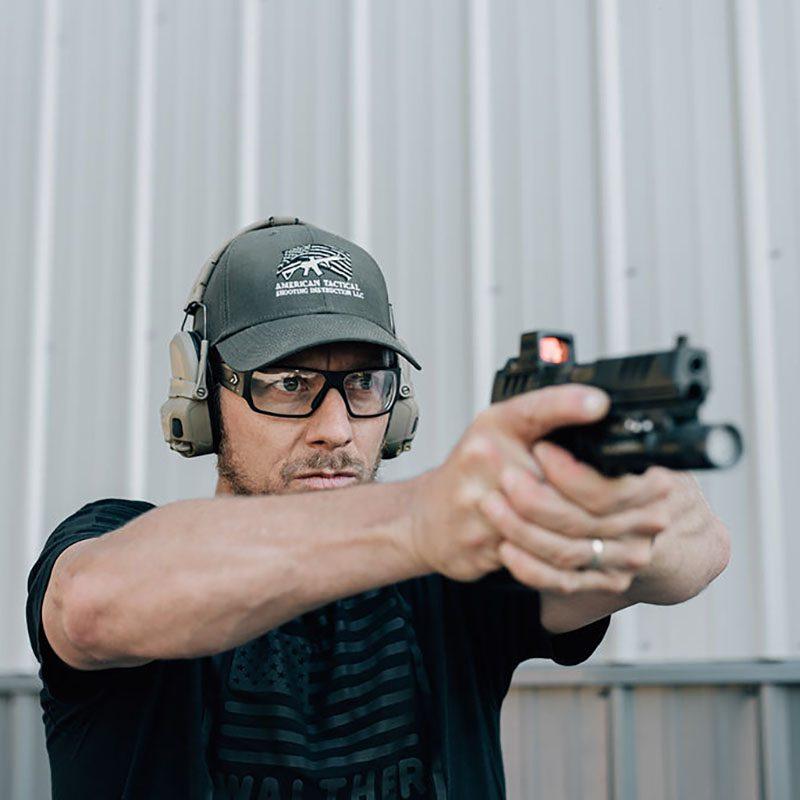
Bill's pedigree is enormously impressive, including his post-service business. He is the owner and lead instructor of American Tactical Shooting Instruction LLC, also known as Amtac Shooting. He is the lead instructor of over 200 Amtac Shooting courses and has trained over 2500 students since 2020. Bill retired after twenty years in the Navy, where his duty assignments included several years at SEAL Team 3 and over 14 years at Naval Special Warfare Development Group. Positions held include assaulter, breacher, sniper, team leader, troop chief, and military working dog department senior enlisted adviser. He has always been an avid shooter and is heavily involved in combatives.
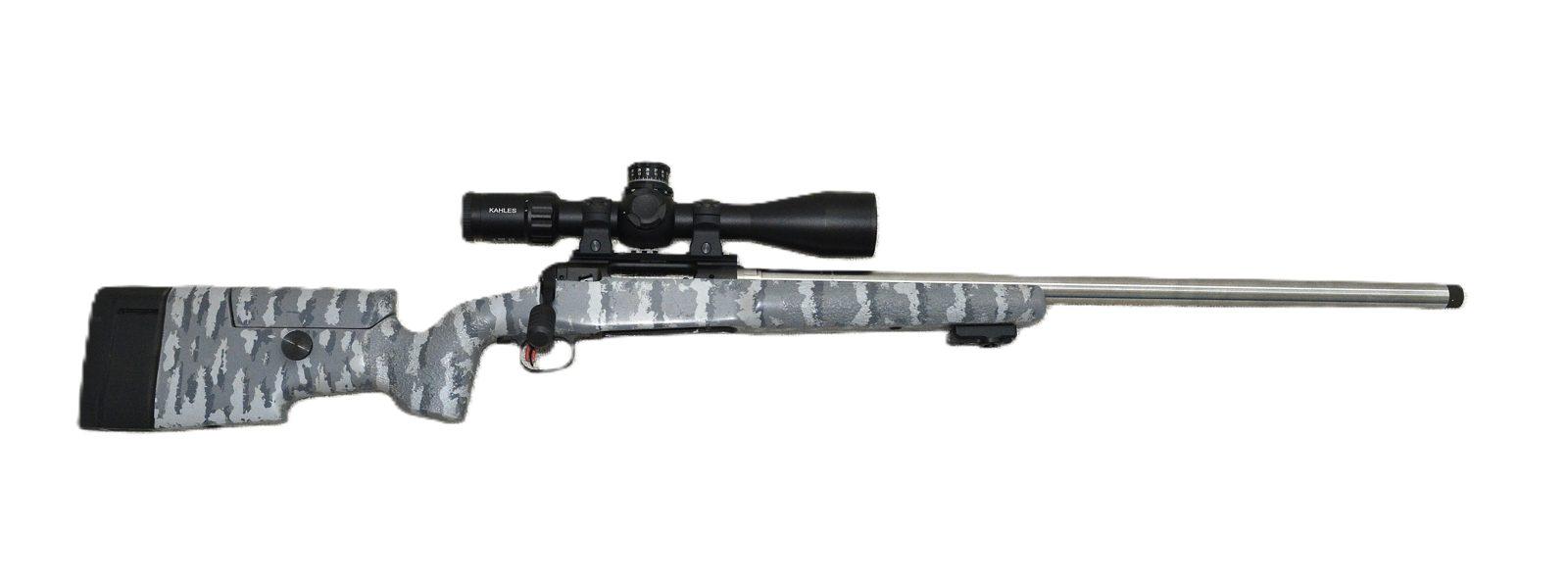
The advance information that was provided to each student after sign-up and payment included a list of gear to bring to the class, any accurate rifle and at least 200 rounds of appropriate ammo. It was suggested that each student have a DOPE card, a Kestrel and/or the AB Quantum app for phone or tablet, a shooting mat, binoculars or spotting scope, and appropriate clothing for the weather conditions expected. I was fully prepared and intended to shoot my 6.5 Creedmoor that I built on a Savage Long Action with a heavy Criterion 26" stainless match barrel threaded 5/8x24. I use a SilencerCo 300 Omega suppressor. This rig is installed in a McMillan A5 Match stock. The scope is a Kahles 525i x 56. Bipod is a Spartan Precision Equipment Javelin (not shown). This setup, minus suppressor, is shown in the photo below.
Class In Session
Our class was limited to eight students and all of us were up and at 'em by 6:00 a.m. as most of us had stayed overnight at the ranch, made coffee and ate something for breakfast before the rest arrived at 7:00 a.m. Bill was introduced by Jeff Houston, ranch and range owner, and each of the students was introduced as well. Bill took the floor and asked everyone, "Do you have a tourniquet with you?" I always have an IFAK (Individual First Aid Kit) and a CAT (Combat Application Tourniquet) in my backpack and a duplicate setup in my pickup under the back seat. Don't leave home with them! And, in all honesty, Jeff had forewarned me that Bill would ask this question as his first order of business. Once it was established that everyone was prepared with tourniquets, we began the class.
Bill started things off by speaking about "mindset" and asking each of us various questions about what we'd be willing to do to protect our family. Bill is a man of very strong faith and wanted to know if having to take lethal measures to protect others was in conflict with Biblical teachings. I may not be a seminarian but I can tell you that my reading of both Old and New Testaments has not resulted in me having any moral or spiritual qualms about permanently destroying (aka killing) anyone who represents a lethal threat to me, my family members, and others who I characterize as being "under my umbrella" of protection. Neither I nor my "people" seek confrontation or being attacked but you can bank on the fact that I will respond with complete violence of action if called upon to deliver it. The discussion on this subject was quite lively and there was little disagreement among the members of the group. Not really surprising as most of us in the group had been in positions in life where this subject was not new.
Bill then reviewed what we'd be doing for the rest of the day. Essentially, we'd go down to the range and establish zeroes for whatever rifle we'd be shooting that day. We'd initially be shooting to known distances from the prone position, working our way out to 1000 yards in 100-yard increments.
As the focus was on precision, most guys in the class opted, as I did, for heavy barrels in rigs suited for stationary position shooting, although one person brought a very unusual setup that I have subsequently duplicated (albeit with a 16.5" Proof PXT carbon fiber barrel)—a 7mm Backcountry with a 20" Proof Research carbon fiber barrel, Zermatt Origin action, and MDT 26 stock. You can see my report on my version of this rifle by clicking here.
Accuracy and Precision
It's really important to understand the meanings of accuracy and precision. People often use these words interchangeably but that is incorrect. Accuracy in shooting means placing your bullet at exactly what your aimpoint is. Thus, if you center your reticle crosshairs at a very small dot in the dead center of a target and your bullet hits exactly at that point, then your shot can be said to have been accurate. Precision in shooting, on the other hand, is defined as how consistently you can make an accurate shot. For example, if you were to take three shots at a specific aimpoint and all three shots were in the same hole, you could say that your rifle setup was very accurate and your shooting was precise. Alternatively, if none of your shots were near your point of aim, and the three shots were measured as being six inches apart, you would conclude that the rifle was not accurate nor was the shooting precise. There are obviously many combinations and permutations of these examples. There are many factors that can influence accuracy and precision. Bill Rapier's intention for our training was to remove and/or control as many intervening factors as possible to ensure both accurate and precise shooting by each of us.
On To The Range
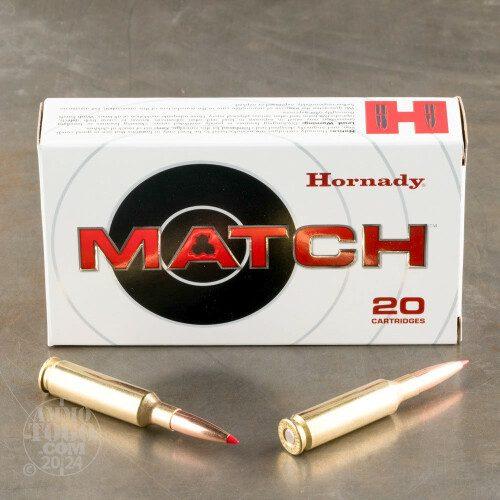
The Range Safety protocol was briefed and following everyone's affirmative acknowledgement of the rules, we were allowed to load and fire at our zeroing targets. I use a 100-yard zero for my 6.5 Creedmoor rifle and have extensive DOPE for it and the Hornady 140-grain ELD-Match ammo.
I confirmed my zero easily and was really looking forward to the rest of the day's proceedings. HOWEVER, Mr. Murphy showed up just in time for me to adjust my elevation turret for 200 yards, fire one round, and for the first time ever with this rifle, I had a failure to extract. Fortunately, I had brought a full rifle cleaning kit with me in the truck, put together a cleaning rod and popped the case easily out of the chamber. I reluctantly removed the bolt as I suspected a problem and I'll be damned! The friggin' extractor was broken! It's an easy enough part to change but did I have an extra Savage extractor? No, I did not.
Be Prepared For The Unexpected
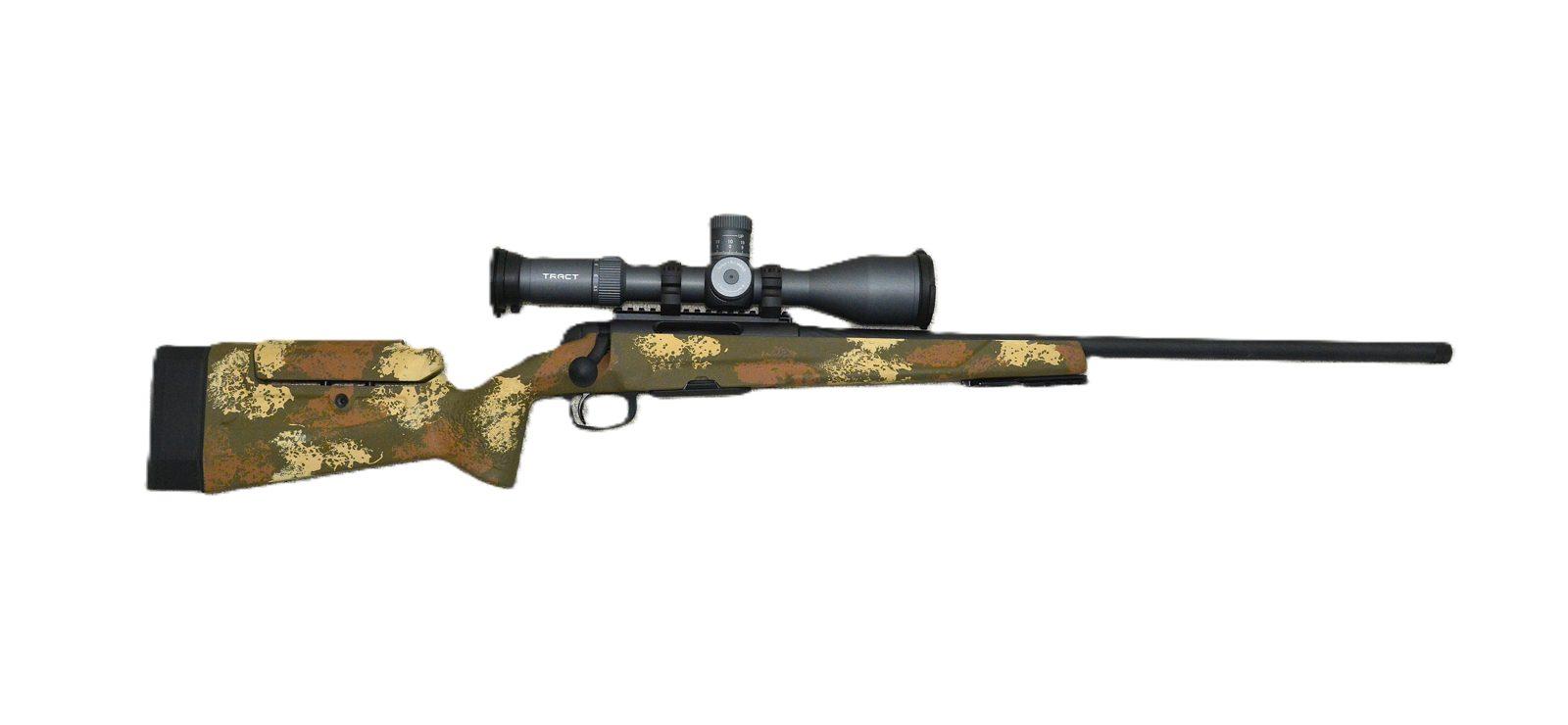
This not being my first rodeo, guess what? I had a backup rifle! It's a Steyr Mannlicher 6.5 Creedmoor with a hammer forged barrel and an upgraded Steyr Mannlicher stock with adjustable cheek piece. The scope is a Tract Toric 4-35X whose glass is very nice but not as perfect as the Kahles. I used a GunWerks Elevate Ti 2.0 bipod (https://gunwerks.com) which is very nice. I had shot this setup a few times previously and had it zeroed for 100 yards but had never really worked it at long-range. DOPE development on the fly.
A bit of trivia: Kahles and Swarovski are both companies within the Swarovski Optik Group in Austria. The share technology and engineering expertise but are independent of one another. They are thought of as "sister" companies but they are each a separate entity. Some people can argue about scopes the same way they debate which is better, the .45 ACP or the 9mm. Having used both company's rifle scopes extensively, my opinion is that they are different but both are fantastic.
So, thanks to my ever-useful Kestrel, I was able to keep up with the group out to 700 yards, where, interestingly, almost everyone was shooting low on the targets. Each steel target, by the way, had a spray painted 1-inch orange dot in the dead center of the target. I shot three rounds into a tight group but was about 2 inches low of the orange dot which was my aimpoint.
Truing
At this point, Bill called a ceasefire and discussed the AB Quantum app and the Applied Ballistics software embedded in our Kestrels. Essentially, both rely on ballistic equations that take environmental variables (temperature, humidity, wind direction and velocity), bullet and gun information (ballistic coefficient, bullet weight and caliber, barrel twist rate, scope height above the bore, muzzle velocity) and via the magic of some physics and calculus, computes the predicted trajectory of the bullet at various distances. Bill explained that there are myriad reasons why the predicted and actual trajectory may differ slightly. To address this, it is necessary to "true" the kestrel inputs such that the predicted and actual trajectory shown in the Kestrel elevation data output are aligned. Once done, you're back to dialing elevation precisely for whatever distance you are shooting. According to Bill, the need for truing shows up sometime after about 500 yards for most long-range cartridges.
There are two methods (at least) for truing your Kestrel. One is to use the CAL MV function in the Kestrel. This is a very simple and accurate truing method. The other, which, Bill taught us, is adjustment of the ballistic coefficient in the bullet data of the app or the Kestrel such that the actual bullet impact is reflected in the bullet drop output at your truing distance. That's as much as I'm going to detail this now—there is other information on both the AB Quantum+ app and the Kestrel's many functions elsewhere on this website as well as in various YouTube videos on this and related subjects.
Having completed our truing, it was pretty straightforward to shoot out to 1000 yards and stay more of less centered up on the target. Fortunately, the wind was very, very cooperative and not much of a factor. Such a still day is pretty unusual at our range but it was a very welcome change of pace!
Changing Positions
We took a break, had a snack and some hydration, then gathered for some discussion from Bill on the subject of field expedient positional shooting, shooting from uneven terrain, shooting at unknown distances, and shooting at angles. Thus far, we'd been shooting from a covered concrete surface using shooting mats. We now were given instructions to successfully shoot three rounds to 500 yards from a kneeling position and from a sitting position (there are optional sitting methods). All of us had experience shooting from these positions but I can tell you, a heavy barrel match rifle is not a good choice when shooting from essentially unsupported positions. Here, Bill was outstanding in his instruction—he showed us how to use whatever gear and objects were available to us to "build" more solid and supported positions. Using gear bags, clothing items, backpacks, soft gun cases and the like were all piled up, worked under arms and/or legs to create a sturdy shooting platform. Once we'd all done this and been "successful" at 500 yards, we took a break for lunch. What a morning! Even the most experienced shooters among our group discussed how useful the morning session had been. A lot of what we did was familiar territory but as is always the case, even information that is known to a person can be refined, clarified, and reinforced when the mind is open to learning.
Following our lunch and bio break, we were instructed to load up gear, ammo, and rifle and follow Bill. Easy enough to slip on my backpack, which is always full of essential gear and ammo, and, as we walked out to the berm at the 100-yard, I couldn't help thinking how nice it would be to have any of my lightweight rifles equipped with a sling. The Steyr is about two pounds lighter than my Custom 6.5 Creedmoor but still not comfortable to haul around in a field carry position.
Truly Field Expedient Shooting
We all climbed to the top of the berm which is probably 40 feet above the 100-yard targets. It is large enough that we all fit on top with room to spare. Bill then had everyone set up a field expedient position in whatever position we desired. As the grass and growth on the berms was at least a foot high, prone was not easily workable. I used a supported sitting kneeling position. We again had to find targets at about 500 which was easy because our range has targets at 100-yard increments from 100 to 1000 yards. Three shots and done, although my group was probably six inches. Bill then had us move down the backside of the berm, about halfway and do it all again. Same result—three on the target but hardly a tight group.
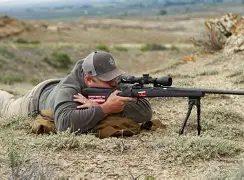
We then migrated to some random distance from the berm we'd been on and off at an angle instead of directly facing the targets. The grass and brush on the range are very well maintained so, when Bill pointed out and described which target set to go after, it was possible to go prone. Given the unknown distance, we were given the option of "milling" to distance or using a rangefinder and Kestrel to figure out the correct hold. I know how to mil for distance but, frankly, I don't remember the formula unless I'm using it repeatedly. And doing the math in my head doesn't always work out. Nevertheless, I've put a brief description of the process and some examples in the Ballistics section of this website.
I found the distance to be 468 yards and relied on the Kestrel for my elevation dial-up. As was the case earlier, wind was simply not a factor and I successfully put three rounds in about a 3-inch group. I know if I had been using my Custom rifle that the group would have been tighter. The fact is, I was getting hot and tired, although my enthusiasm never waned. Just a case of the mind outpacing my increasingly aged body.
We were talked through shooting at up and down angles and, again, most of us were familiar with the concepts. Regardless, Bill used several real-life examples to illustrate the points he was making. What a wealth of experience he has accumulated over his career.
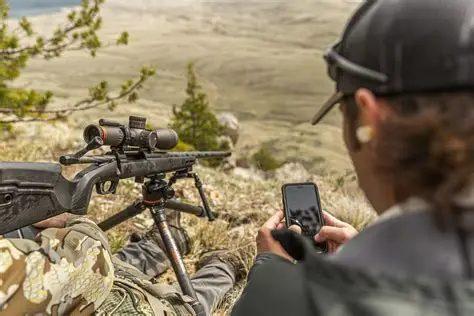
I find the following website to be useful in reminding me of corrections for inclined shooting: (https://www.badassoptic.com/guides/compensate-for-shooting-angle)
We gathered up out gear and guns, brushed ourselves off, and headed back to the covered shooting line where Bill summarized and reviewed what we'd done. He made numerous suggestions on drills and repetitions to use individually in the future. After about 30 minutes of Q&A, we adjourned for the day. Three of us, including me, headed home as we were not participating in the second day which was focused on edged weapons combatives. Besides, I had a friggin' broken extractor to repair. All in all, a fantastic experience.