To start off the 2026 New Year, my Jeff Houston (owner of the Iron Creek Ranch in Ennis, Texas) and I went to the Outdoor Extravaganza at the Kay Bailey Convention Center in Dallas. We had lots of reasons to attend but foremost among them was for me to meet with Steve and Jason Rabakoff, owners of Parkwest Arms (https://parkwestarms.com) to just say hello and tell them how fantastic my custom SD-10 Single Shot Falling Block 7mm Mauser rifle was. It was delivered to me mid-2025 and I was super happy with both its appearance and performance. There is a review of this beautiful rifle that can be found by clicking here. I had ordered, a couple of months earlier, what would turn out to be a fantastic Parkwest Arms SD-76 Bushveld in .416 Rigby (you can see that review by clicking here.) There is typically about a year or more lead time from order to delivery for Parkwest custom rifles so part of my agenda was to lobby the Rabakoff's for earlier delivery. We had a great time talking and they said they'd do their best to expedite my rifle. I received it six months later.
Jeff and I wandered the aisles looking at various firearms and accessories, stopping to chat with the many people we know who were exhibitors. This event, like SHOT shows and NRA meetings, provides for the "kid in a candy store" experience. It is sensory overload for hunters and shooters and neither Jeff nor I were spared from overdosing on such good stuff.
We stopped by the FTW ranch booth to discuss possible training opportunities offered by FTW. A little background on the FTW Ranch. The ranch is located in the southwest part of the Texas Hill Country, near Rocksprings and Barksdale, Texas, off Ranch Road 335. 12,000 acres (https://ftwsaam.com) in the Balcones Escarpment area which means the ranch is situated on land that rises and falls—meaning hills and canyons—about 1,000 feet in terms of elevation change. The ranch contains twenty-six individual shooting ranges that includes large and small steel targets at various ranges to one thousand yards and beyond. All of the fixed shooting positions are covered by roofs but otherwise open. The unique geography presents every kind, direction, and velocity of wind and on any range at any time, the wind can present in multiple directions simultaneously. Beyond steel targets, there are life-size realistic game animal targets from small antelope to full-size Cape Buffalo, bull elephants, and leopards, all of which move, including charging at you from close distances. There are also moving targets that move from right to left such that shooters can learn to lead targets of varying speed and distance from offhand shooting positions. A significant proportion of the people who participate in FTW's offerings are civilians, to be sure, but there are many military operators and specialized law enforcement personnel who train and use restricted training facilities available only to them. More on this later. Finally, while the entire ranch is secured and not accessible to the public, there is a large section of the ranch that is high-fenced containing a variety of exotic game animals that, for a fee (well explained on the website), can be hunted—this means scouting, tracking, stalking, and actual hunting. This is very different from some exotic game ranches where "hunting" is vehicle based and tends to be more like game animal shooting.
Multiple training courses are offered on a scheduled basis, ranging from basic precision shooting and hunting, to advanced precision shooting, field medicine, and more. These are all described in detail on the FTW website listed above.
So, long story short, there in January, Jeff and I signed up for a 5-night, 4 full day advanced precision training program as we are both reasonably skilled precision rifle shooters (I have some 60 years of rifle experience ranging from time growing up on a farm, several years in the US Army, to having trained with multiple SEAL and PMC snipers, etc. Jeff is a former Green Beret and a highly trained shooter, hunter, and instructor who has continued training with Tier 1 and other special operators since he completed his service. Our course was scheduled for April 3-8 meaning we would arrive on the late afternoon of the 3rd as we would be making the 8-hour drive from Dallas to the ranch. Our departure would be early morning of the 9th for the return drive. We were to be two of the four members signed up for and scheduled to attend the course.
In mid-March, Jeff called to tell me that he had a problem. He had been invited to attend the Masters Tournament in Augusta which was to be held April 6-12. His invitation was from a senior Augusta member who had a large house with all the amenities in Augusta. As a guest of a member, Jeff would have a super special pass that allowed him access to every part of the club, including the players' areas, the special cabins, and the like. We agreed that he could not possibly pass up that invitation to go shooting so he went to the Masters and I loaded up my truck, kissed my wife goodbye and began the long drive solo to FTW early morning on April 3rd.
To be clear, not only was the course to focus on precision shooting but it also was integrated with the Safari course which prepares people for African safaris, both plains and dangerous game, as well as mountain/backcountry hunting in other venues around the world. Tim Fallon, FTW's owner, is a renowned world-wide hunter and the FTW lodge contains dozens of partial and full mount trophies of every game animal you can think of and several you can't that Mr. Fallon has harvested. FTW, by the way, stands for Fallon Trophy Whitetails, the original hunting proposition offered by Mr. Fallon. To say that FTW has grown since 1996 when it was founded is an understatement. It is one of only a few world-class facilities anywhere that does what it does.
I arrived at the entrance of the ranch about 4:30 pm Friday afternoon. The drive from the ranch entrance, itself located after a long drive on a remote hill country road, to the lodge took a while. But, upon arrival, and stretching after the long drive, I got myself checked in and unloaded my gear into one of the guest suites immediately adjacent to the lodge. After unpacking, I was instructed to bring my guns and ammo into the classroom area of the lodge and have them checked in and safely stored until needed. I'll give a description of gear, guns, and ammo below. I was asked to meet with the instructor(s) who would be my guides and teachers for the next four days so I went downstairs from the classroom into the lounge to find them. For privacy reasons, I'll use first names only but my guys were Doug and Kolby.
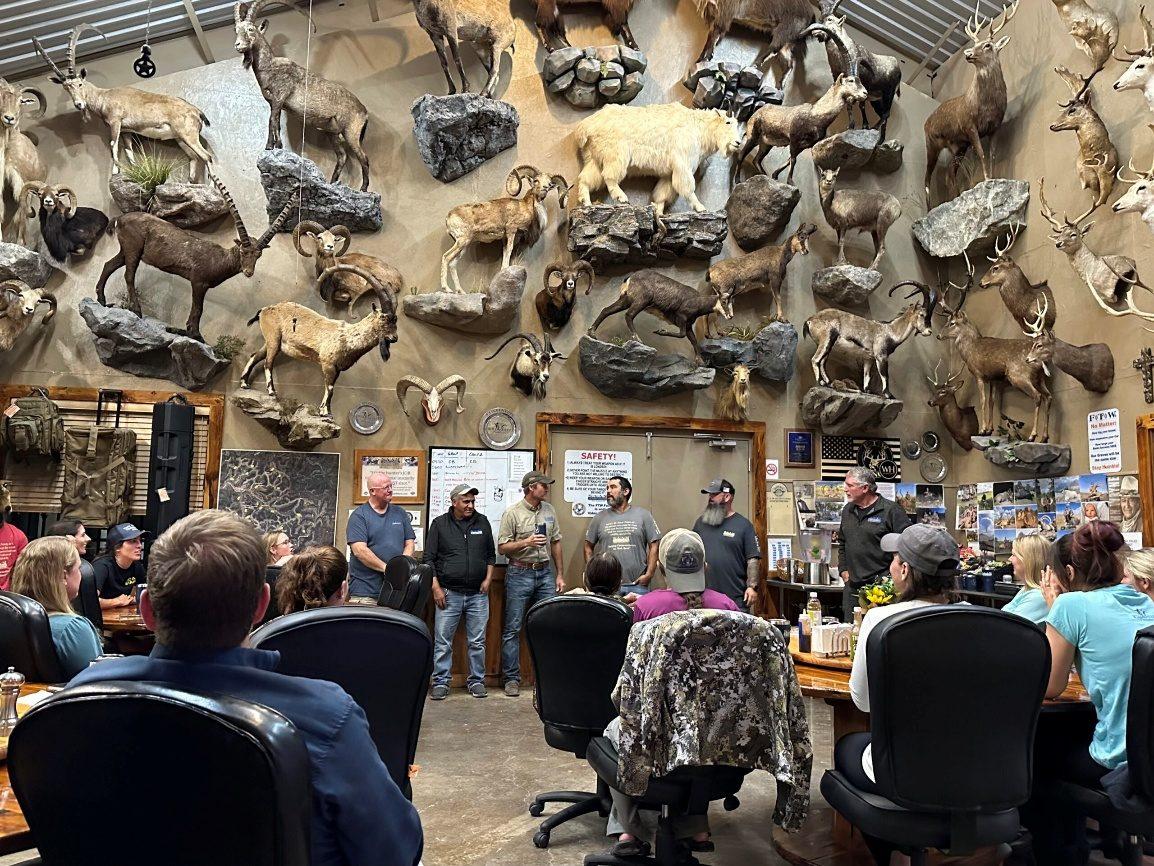
Doug was to be my principal instructor. His pedigree is simple—25 plus years as not only a SEAL operator but he developed and taught or oversaw the teaching of virtually every SEAL sniper over a 20-year period. His curriculum still serves the Teams today.
Kolby was to be a support instructor/aide on occasions when needed. His resume was equally as impressive as Doug's—a former Army Airborne trooper with the 173rd Airborne Division and subsequently a Delta Force operator. That's it. What else do you need to know?
Doug said he was made aware that Jeff wasn't coming and why and that was fine. However, it was only that morning that he and Kolby learned that the other two guys scheduled to attend had withdrawn as well. I was not given their reason for bailing out. At that point, I assumed the guys were going to tell me that my course was cancelled. That did not happen. Instead, Doug told me that I would be the sole object of their attention for the next four days and asked me if that was ok with me! You have got to be kidding! I was going to be the sole student of these two masters of disaster for four days? I thought I might have a seizure then and there. I said, "I can take it if you can," to which they replied, "don't forget you asked for this!" We had a cocktail or two, told all kinds of stories—the kind that guys tell each other to feel each other out, assess personalities, evaluate experience, knowledge and opinions, and in general "see if there is any there there." During the course of all this, we had dinner together and met with another group of people that were there for a field medicine training program. Kolby was primary support to that group. Due to the lack of real overlap in the training curricula of our two different programs, our primary interaction as a group was at mealtimes and after hours in the lodge bar and lounge following long training days.
Guns, Gear, and Ammo
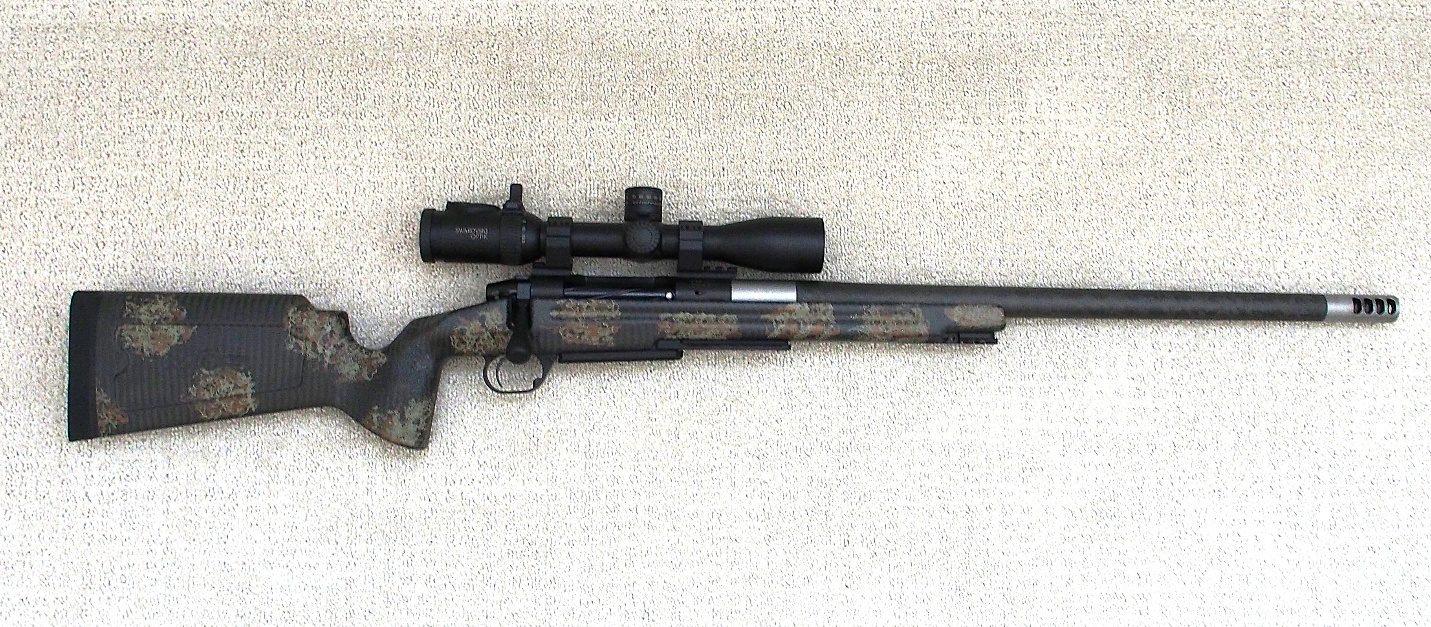
Because shooting courses at FTW rely on a lot of shooting practice, the expectation for my course was that I bring two rifles—on big bore that would meet African dangerous game minimum requirements and one plains game type rifle. Accordingly, I brought my custom .375 H&H built by Lloyd Hill of Genesis Rifles (https://genesisrifles.com)
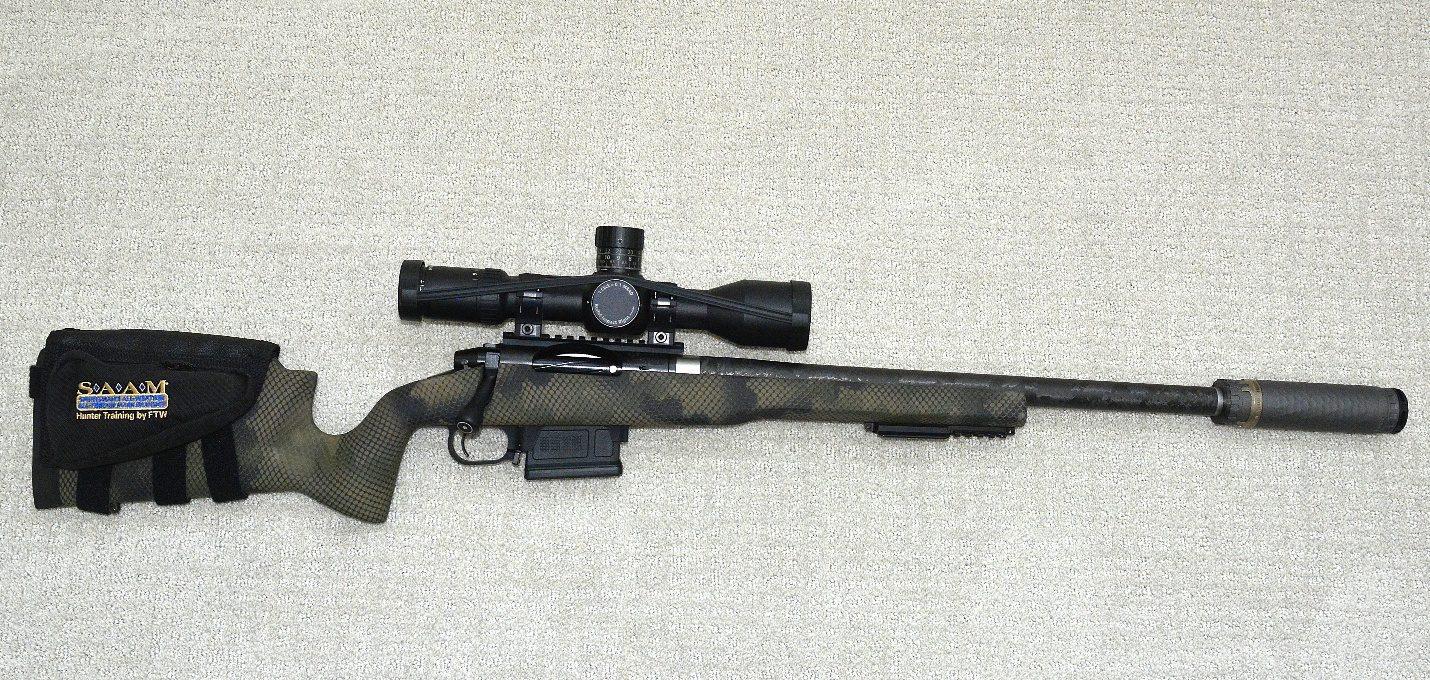
and my Proof Research MTR 2.0 in .308 Winchester (https://proofresearch.com/rifles/elevation-mtr/) .
The big gun is equipped with a Swarovski Z8i 1.7 x 13.3 x 42 riflescope (https://www.swarovskioptik.com/us/en/hunting/products/rifle-scopes/z8-i/z8i-plus/z8i-1-7-13-3x42-ii)
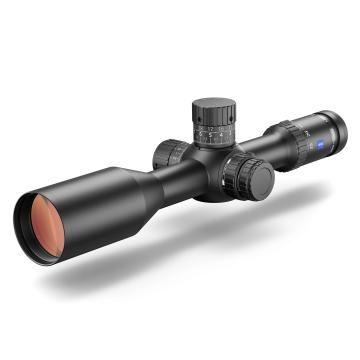
while the .308 is topped by a Zeiss LRP 5 5-25 56 mm scope (https://www.zeiss.com/photonics-and-optics/us/precision-shooting/products/first-focal-plane-riflescopes/lrp-s5.html) .
Of note, the .308 is equipped with a 20" threaded carbon fiber barrel to which I direct thread a Titrex 300 (seen in the photo above) Titanium suppressor (https://precisionarmament.com) that adds 6 inches to the barrel length and about 9 ounces of weight. This setup is very maneuverable, light overall, easy recoiling, and very, very accurate when I do my part.
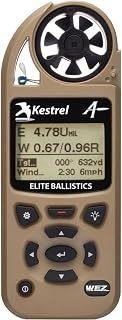
Other important gear of note included my Kestrel 5700 Elite WEZ (https://kestrelballistics.com/kestrel-5700x-wez-weather-meter-applied-ballistics)
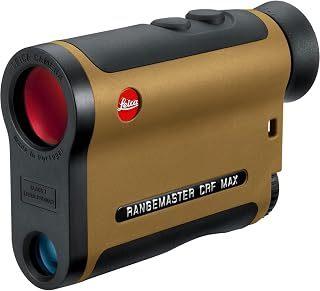
and my Leica Rangemaster CRF Max (https://leica-camera.com/en-US/product/leica-rangemaster-crf-max)
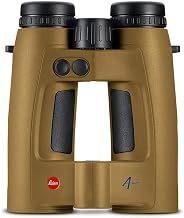
as well as Leica Geovid AB+ binoculars (https://leica-camera.com/en-US/product/leica-geovid-pro-10x42-ab).
All of these combined provided a lot of redundancy for the Applied Ballistics programs that I use for my ballistics work and DOPE development. I had previously chronographed my ammo choices using a Garmin Xero Pro C1 (https://www.garmin.com/en-CA/p/771164/)
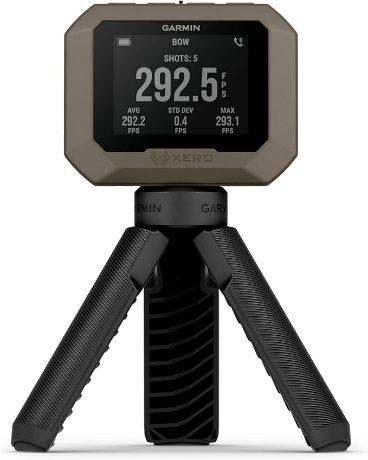
and had my DOPE information available in both print, my ballistics apps, and stored in my Kestrel. The Garmin is a phenomenal tool, very accurate, and so much easier to use than the old-time chronograph "sky screens" or the clunky LabRadar apparatus that were great and useful in their time but that time is long gone.
Last but not least, my hearing protection consisted of both foam ear plugs on a string and Walker Razor electronic noise-cancelling earmuffs.
I brought one case of Barnes 300 grain Vor-TX .375 ammo and two cases of Barnes 168 grain TTSX Vor-TX .308 ammo. FTW's "welcome packet" includes both a padded shooting glove and a strap-on recoil shoulder pad. Despite the prodigious amount of shooting over four days, I never used the recoil pad and only tried out the shooting glove for a couple of shots but didn't use it after that. Neither my shoulder nor my hands were tender at the end of the program. Despite what you hear or read about the mighty .375 H&H and it's 40+ foot pounds of heavy recoil, mine is an absolute joy to shoot prone, kneeling, or offhand, due to Lloyd Hill's proprietary titanium muzzle brake that totally tames the .375 (which I call the Beast). One other item in the welcome pack was a cheek pad that allows for adjusting the height of the cheek rest on your stock. I installed mine on my .308, described later, as otherwise, I don't like the cheek weld I have without it. It is a hugely useful accessory and I have subsequently bought several more for other rifles in my stable. So, with all the arrival, gear and guns information out of the way, here's what I did each day during the actual training program.
Day 1
Following 6 a.m. wakeup, coffee and a great full breakfast, all participants in all the programs being conducted at the ranch assembled in the large classroom where everyone received the packs of materials (handouts, booklets, brochures, recoil pads, shooting gloves, ear plugs, and the like) appropriate to their training curriculum. This was followed by a safety briefing and protocols to be observed at all times both on the general grounds of the ranch and the actual shooting ranges that would be used. A brief history of the FTW ranch was given, the various instructors gave information on their backgrounds, skills, and experience bases, and each student introduced himself or herself and described why they were at FTW and what they hoped to gain from the experience. This was followed by the Field Medicine group departing for their morning training venue, accompanied by Kolby and the Medic in charge of the program. That left me and Doug. Rather than launch into a structured presentation, we spent about a half-hour going into more detail about my background, experience, and knowledge that I brought to FTW. He concluded that I fell into the category of advanced shooter with solid ballistics knowledge and capability. We spent considerable time talking about Brian Litz (https://appliedballisticsllc.com) and the science of ballistics. He then described what we'd be doing that day and each of the next days so I'd have a preliminary orientation to each day's training focus.
We began formal instruction by reviewing the functions and advanced capabilities of the Kestrel 5700 Elite, including having detailed discussion of ballistic coefficients, sectional density, wind measurement and uses, and truing the predictive equations used by Applied Ballistics which is the ballistics "solver" program embedded in the Kestrel as well as the AB Quantum app on my iPhone, my Leica Rangemaster CRF Max, and my Leica Geovid AB+ binoculars. We spent a good 90 minutes on this discussion that also included a booklet, proprietary to FTW, that presents a visual step-by-step method for every function of the Kestrel. This book is priceless as, no matter how often you use the Kestrel, there are occasions when a review of a particular method or technique for calculation is not only helpful but essential. Having this resource makes the use of the Kestrel more efficient and you as a user more effective. As we finished this classroom session, it was almost 11 a.m. so we took a bio break and then it was time to check zero on the Beast, which was to be the first gun to be used for the initial "Safari" training element.
We went off to the zeroing range (paper zeroing targets on backers) to do the necessary zero checking and make any adjustments as needed. I did my environmental assessment (temp, humidity, density altitude) with my Kestrel and found no need to adjust my DOPE for 100 yards prior to making my cold bore shot. Doug had never before seen me shoot and had never seen my rifle perform. As it turns out, he was not only doing a zero check with me, but he was also do a "shooter check" as well. He would observe my pre-shot routine, my trigger discipline, my shooting set-up, my breathing management, and overall physical positioning. For this exercise, I was shooting off a bench using my pack as a rest—this was encouraged as almost everything we would do during the program was field based and intended to duplicate hunting conditions which obviously excludes use of nice shooting benches with support apparatuses.
I set myself up, checked my elevation turret, pulled the rifle into my shoulder, and flicked off the safety—at which point, Doug said to hold fire. I put the safety on and he asked me if I had forgotten my recoil pad. I said no and that I didn't need one. He reminded me that we'd be putting more than 150 rounds through the Beast and I might want to reconsider. I said I might but for now I was good to go. So, reset, reposition, safety off and aiming for the bottom left corner point of a red 1-inch square at 100 yards. Gentle breathing and with the reticle perfectly still on target, I pressed the trigger until BOOM! The Beast had been unleashed. The 300 grain Barnes Vor-TX was exactly on my point of aim. So far, so good. I turned to look at Doug and he just nodded—he'd been watching me during the shot but glassed the target and said to go again. I then ejected the first cartridge and chambered the next from the detachable box magazine. Went through my routine, locked the reticle on target at the same aimpoint as before, and, at the bottom of a breath, sent round 2 downrange. Another loud BOOM and a hole appeared about ¼" high and ½" right of my point of aim. No comment from Doug except that he said "One more." Ejected the spent brass, ran another of the big .375's into the chamber and set up, repeated the reticle on aimpoint, bottom of breath trigger break, and with such absolute clarity as the Swarovski permits, sent my third and final round aimed exactly as before and unleashed the massive boom that the muzzle braked Beast produces. The third round was ½" high and directly above the first round. So, all in, sub-MOA for sure. I turned off my Walkers, placed them on the bench, and ejected my third spent case. I thought I was hot stuff and asked Doug in a smart ass way, "Well, what do you think of that!? To which he replied, "The outcome was good as zero is concerned. Bu there are a couple of things we need to work on." At that point, I could have pushed back and told him what hot shit I was but then my better judgment prevailed. I pushed my ego down and recalled that this dude had trained more best-in-the-world shooters than anyone one earth and I was not among that group. So, instead, I said, "What did you see that I need to work on?"
Doug is one professional guy. He asked me, "Why do you wait until well after you shoot to eject a round? Imagine if you were hunting a Cape buffalo and you shot him, even hit him exactly where you aimed, didn't eject your spent case, and instead of going down DRT (dead right there), he turned and starts charging you at 30 miles an hour. How are you going to make a follow up shot?" He then said, "You're going to experience that this afternoon, so we have to ingrain in you to run the bolt IMMEDIATELY after you fire. You can still keep the rifle in firing position while you do that and still see your target and impact. But it is essential that you run that bolt just as soon as your shot breaks. This action has to be smooth and just as much as part of your routine as everything else that you do." I got the idea or at least I thought I did and said so. We would revisit this subject again later in the day.
"What else did you see?, I asked. Doug said that I was very precise about my breathing and it was clear I was breaking the trigger at the bottom of the breathing cycle. He suggested that the priority was minimizing reticle wobble and that I should be able to do that at any point in the breathing cycle. He said that there are times when you simply have to aim, resolve your target and shoot such that you can't wait even a fraction of a second to break the trigger. He promised I would get lots of opportunity to prove this point.
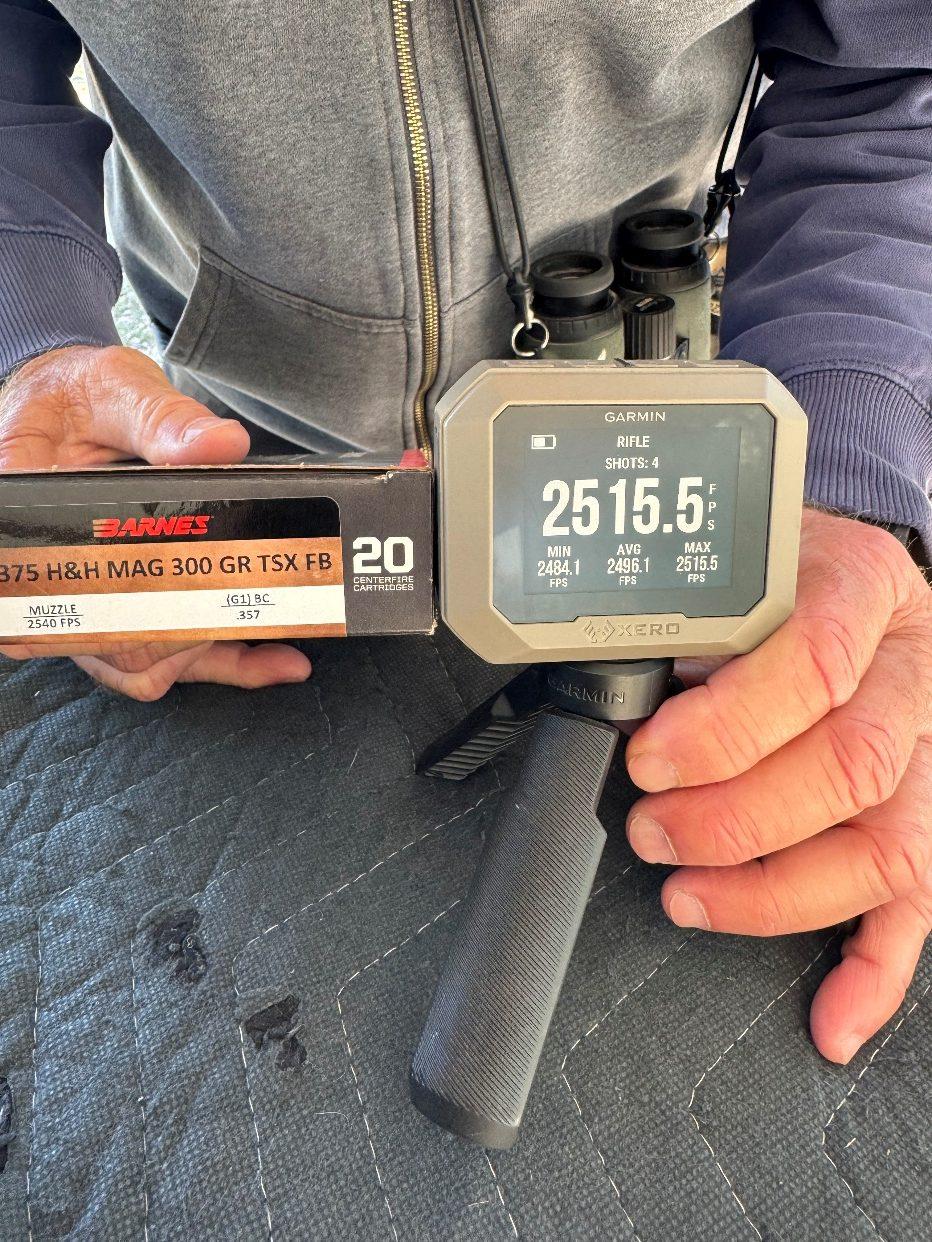
At the end of my performance review, he said very positive things about my rifle and ammo combo, and was happy that I had a good zero as we would have lots of chances to test my capabilities with the gun. But, first, off to lunch.
One thing for certain about the FTW Ranch. You will have great food and a lot of it prepared by three lovely ladies who work all day to prepare fresh, healthy food. My appetite is good but I admit I had to exercise a lot of self-control so as to not stuff myself. As it turned out, it would not have been a good idea to be slow and sleepy for the afternoon session immediately following lunch.
We stopped in the classroom for about a forty-five minute discussion about the kill zones of various game animals—all of the dangerous game species (to include crocodiles and alligators), as well as elk, moose, deer, antelope and several other species. Doug's presentation was assisted by a PowerPoint deck that showed the kill zones for each animal. A lot of detail about shooting angles, best choices, and low probability shots was presented. The general rule of thumb is that most mammals have two or three four to six inch kill zones that can be shot from several perspectives, principal among them are frontal, broadside, and quartering. While a shot from directly behind is possible, it is less ideal than other angles.
Throughout all discussion concerning hunting and shooting animals, it was repeatedly emphasized that the hunter/shooter had an absolute ethical responsibility to humanely kill his target and to never take shots that exceeded his capability to deliver a one-shot kill. It was further strenuously reinforced that if a one-shot kill was not delivered, it was the hunter's responsibility to track, find, and as quickly and safely as possible, dispatch the wounded animal. I found the information presented to be extremely well done and given the detail for each animal, allowed me to retain in a different way information that I had learned over many years but had not thought about in such a structured way. Definitely a value adding experience. If you need a reference source for hunting many different game animals, see (https://huntervale.com/tools/shot-placement/) which has a ton of good info on game animals.
Doug and I left the back exit of the lodge and hopped in one of the FTW Jeeps which are open air and have gun racks to which you can secure your gun or guns. There is plenty of room for your backpack of stuff along with ample ammo—I was told to bring three or four boxes of .375 which was my first indication that this would be a busy afternoon.
We drove out to one of the mover ranges where Kolby was at work getting ready to run the range. Essentially, there are several moving targets, some of which are life-size dangerous game such as Cape buffalo. These are targets whose hooves are attached to "cars" that run on a track from about 60 yards toward you and will run you over in a full on charge if you don't hit them in a 6-inch kill zone. There are also targets with ten inch painted circles on them also attached to cars but these run from your right to left on a separate track at about sixty yards away. They can move at varying speeds. Finally, there is a stationary Cape buffalo target standing broadside to the firing line about 50 yards out which, when hit in the kill zone, falls over backward. All of these were under Kolby's control as he was manning the control board that is located in an area above the firing line.
Doug briefed me on what we were about to do. First, I was to hold my rifle in a carry position, then aim and shoot the stationary Cape buffalo on Doug's signal. If I hit the kill zone, we'd reset the target and do it again. Ready. As soon as I heard the beep, I shouldered the Beast, placed the reticle on the six-inch kill zone ( which is actually a painted, slightly off-white circle denoting the kill zone) and pressed the trigger, then ran the bolt as previously instructed. The target teetered and fell over slowly. I assume there's some hydraulics involved as the big steel buffalo slowly was stood back up. Back to the carry position, I confirmed I was ready and, at the beep, again shouldered, aimed and fired. Dead center of the kill zone. I wondered how I could miss at this distance. I knew that the hundred yard zero would put me one to two inches high at 50 yards and held accordingly. I cannot emphasize enough how crystal clear the Swarovski scope is an how utterly sharp the reticle is as it sits on the target. I had and still have great confidence in the accuracy and repeatability of the Beast.
On to the next task, Doug explained the following: "There are two Cape buffalos at 50 to 60 yards. On my signal, you will kill the left one as it is charging you and reload. You will move from your position, around behind the big tree to your right, take position and kill the second one that will likely be right in front of you. Don't miss. You understand the consequences of missing either one." You may think, "how hard can this be? Two shots in maybe five seconds? Piece of cake, right?" Well, I can tell you the experience may be tempered by the fact that you know you can't actually die if you miss but I was jacked up to begin this exercise—already a bit of adrenaline rush. I could see both full-size buffalos standing and could also see the two kill zones on each, one below the huge horn boss and one center chest as these would be solely frontal shots. The buffalos were dark brown overall but the kill zone targets were a slightly lighter color. I rehearsed the sequence of events in my mind, then while the Beast was unloaded, did a dry run. Aim, shoot, run the bolt while moving back a step and around the tree to my right, then aim and shoot again and run the bolt. This was not going to be as easy as it may sound. But, time to go! I loaded the Beast—one in the chamber, safety on, two in the magazine. I took a couple of tactical breaths—4 seconds in, hold for 4, 4 seconds out. Then shrugged my shoulders, rolled my head to loosen my neck and told Doug I was ready.
Gun in the carry position, the beep sounded and two freight trains charged straight at me. I shouldered the beast, found the reticle and quickly placed center chest and fired. I could see the impact as I ran the bolt, and nearly tripped on my own feet as I circled behind the tree to take position and aim, then fire, on buffalo number two—also center chest. I remembered to run the bolt! Buffalo one had stopped when killed at about 30 yards out and buffalo number two was about 10 yards out. I had hit both well within the kill zones but, not surprisingly, neither was dead center. For the first time, I thought it was pretty good. I debriefed with Doug who said I'd done well and good job that I didn't trip and fall over! He said I would not have been the first guy to stumble and miss the second charger. I agreed with him that the charging of these life size targets was adrenaline inducing.
We repeated this exercise five more times. I obviously knew what was coming and ran and re-ran the scenario in my mind before each run. I successfully killed both buffalos each time, shooting the center chest kill zones on each. Doug asked me why I didn't take any head shots and I said that I thought in reality that that center chest would appear more stationary than the head which is smaller (although still huge) and might be moving up and down or side to side. No argument on that either way.
It was an absolutely beautiful day—clear blue sky, a little breeze and temperature probably in the high 60's. I was feeling in the groove and ready for whatever was next but first we took a brief break and had a bottle of water. Kolby remained up in his perch and reset all the targets we'd shot up to that point.
Following our break, next up was shooting lateral movers, the painted circle targets on cars that moved from my right to left. We had a couple of distance options as the firing lines were at about fifty and seventy yards. We started at fifty. I was very comfortable at fifty as, while zeroed for 100 yards, the 300 grain Barnes Vor-Tx bullet is just a bit high at fifty. As a practical matter, shooting offhand, for me, was just put the reticle on the target and shoot. As hard as I might try, there is still reticle wobble when I shoot offhand. So the trick is to shoot when the reticle is as steady on the aimpoint as possible.
Doug explained that there were three targets on the "train." The train would start off fairly slowly but definitely moving right to left starting from behind a berm and then moving until passing behind another berm. In effect, this meant that there was a "window" of time in which I could take a maximum of three shots as that was the capacity of the Beast—one in the chamber and two in the magazine.
I said I was good to go and took a standing position, gun in the carry position with safety on. At the beep, the train appeared and was moving from right to left. I shot the first target, ran the bolt, and shot at the second target, again running the bolt. By the time I got the reticle on target three, the train had disappeared behind the leftside berm. Damn! As Kolby ran the train back to the starting position very slowly, Doug pointed out that I had: 1) not shot at target three, 2) missed the circle (10" in size) on target 2 but hit the target backer about 6" from the outer part of the circle, and 3) hit target one just inside the right center edge of the circle. Doug took the time to explain the object of this exercise which is to figure out how to lead a laterally moving target. While you can use a Kestrel to calculate leads at various distances, it is obviously impractical to do so in real time. So, instead we sat down and ran a couple of scenarios for a moving target at five and ten miles per hour at fifty and seventy yards using the .375 H&H ammo at hand. While that was useful, it turned out that you also have to figure out how to estimate by eye that lead distance at the range of the target. So while you can scientifically calculate the lead or offset, you need to eyeball that amount in real time. The Swarovski is not equipped with a complex reticle like most of my other guns—I shoot Mil scopes exclusively so using offsets or leads with, say, a Tremor 3 or Horus 59 "Christmas tree-type" reticle is pretty easy, especially from a fixed position. Discussing this with Doug caused a light bulb to go on in my head—essentially, I just imagined the .1 Mil marks in my other scopes and imprinted that vision on my Swarovski. So now I at least had a method for leading different amounts depending on speed of the mover.
Round two was easier but not perfect. Using my brain method, I centered the first target pretty well, was within the circle but just within the circle on the right side, and totally missed the third target altogether. There was a lot going on in my head. Doug suggested taking a breath and trying again, which we did. Third time, as they say is a charm. Centered targets one and two and was within the circle, again, good elevation but just on the right edge of the circle which meant, I was not leading enough.
Iterations four through six were ok in that most runs were three hits but it always seemed I was chasing the last target and not quite keeping up.
Do it again and again. Doug suggested that I think of this exercise like upland bird hunting with a shotgun—you swing the gun and follow through after the shot. Obviously, in this case, the follow-through should put you in the correct lead for the next target, and so on. So by the time we got to the tenth round, I had the concept nailed and centered up within an inch or two on all three targets. Now that I felt I had this figured out, I asked Doug if Kolby could run a couple of trains at faster speeds to which he agreed. At the beep, I begin my right to left shoot and swing while running the bolt and the next target simply appeared in the position I wanted and I shot it, then did the same with the next follower. I got it! Meaning I understood and now felt I could do this at any speed. Just for fun, I asked if we could do a couple of runs at the seventy-yard line and the answer was yes. Two runs, six targets hit well. A successful learning experience. Lots of ammo downrange.
We had been at this for hours but it was exhilarating now that the frustration part was behind me. I have to say, without the coaching, the dissecting, and the repetitions, I'd likely never really developed this skill but it is now in my repertoire should need and circumstances arise. OF course, this was all done at fairly short distances but the principle applies to any distance. I'm also pretty sure this is a perishable skill that requires regular practice to maintain proficiency. That's a challenge for anybody as most shooting facilities lack moving targets.
We had burned through five boxes of .375 during the afternoon. Doug asked me how my shoulder was feeling. In all honesty, it's hard to believe you can shoot a light rifle like mine for this big cartridge and heavy bullet without being pounded but I was completely fine with no tenderness anywhere. That is a credit to Lloyd Hill, the designer and builder of the Beast. It is truly a fun gun to shoot as many times as you like. It may be easy on the shoulder but the concussion from the muzzle brake is absolutely noticeable!
We packed up our gear and went back to the lodge. I went to my room to clean up and put my gear away. Guns and ammo, I may have mentioned are stored in racks and bins in the classroom. After all that, I went down the classroom stairs to the lounge and hit the bar where Kolby was bartending. He asked me what I'd like and I told him "an Irish Godfather" which is one shot of Amaretto and two shots of Jameson. As he delivered my beverage, he said, "That was some good shooting this afternoon." Having a Delta guy tell me that put me on cloud nine! I told him that it was a great learning experience and how much I appreciated his help. He said repetition was a great way to reinforce learning and also commented how lucky I was to have Doug's undivided attention. That had never happened before. I said I was thrilled to be the only student and looked forward to whatever was next. He told me to be prepared for excitement. After chitchatting with a couple of the other Field Medicine students, we adjourned for dinner which was again a feast of abundance. Ribeyes, potatoes, salads, roasted vegetables and a variety of desserts which I don't ever eat. After dinner, one more cocktail, then early to my room for a phone call home, doing the ever annoying email, and finally, early to sleep as 5:30 was the wake up for 6 a.m. breakfast.
Day 2
Breakfast at 6 a.m. with essential coffee. Back to the room to get my backpack and get organized, then off to the classroom for discussion with Doug about the day's agenda and then more formal instruction about wind—reading it, estimating it, what to look for in the terrain over which you would be shooting, and then something called "wind factor."
The best I can do to explain wind factor is the following: Wind affects the lateral trajectory of a bullet when it is blowing from any direction other that directly at you (the 12 o'clock position) or directly behind you (the 6 o'clock position). Wind blowing from 3'oclock or 9 o'clock is called a full-value wind. For example, if you take a measurement with your Kestral and the wind is blowing at 5 mph from the 9 o'clock position, the wind effect on your bullet will be 100 percent or full-value of 5 mph. If, however, the wind is blowing from the 1 or 11 o'clock position, the wind effect is only 50% of the wind velocity—in this case, it would be the equivalent of 2.5 miles per hour. I've put in a table below to organize this information and hope it makes sense.
These percentages can be fine-tuned for wind directions that fall between the various clock positions but the fact is that I'm not yet good enough to tell the difference between a wind blowing from the 1'oclck position and the 2 o'clock position. I can do it with my Kestrel and that is a helpful training aid to help teach such subtleties. But, and this was emphasized over and over, when you're hunting, it's likely that you can keep track generally of wind direction and velocity as that should constantly be running in your mental computer but where your game animal will pop up may not permit you to determine precisely the wind direction as you prepare to take your shot. However, it is also the case, particularly for open plains type hunting or even mountain terrain hunting that you may well have the time to set up your shot (typically longer range than deer hunting in the Eastern woods, for example) and precise wind velocity, direction, and effect estimation/calculation is possible and certainly desirable. The competent hunter/shooter will know the effect of wind velocity and direction and either have data in a previously prepared DOPE sheet or committed to memory.
| Clock Position or Direction Wind Is Blowing From | Percent of Full-Value | 5 MPH Wind | 10 MPH Wind | 15 MPH Wind |
|---|---|---|---|---|
| 12 | 0 | 0.0 | 0.0 | 0.0 |
| 11 | 50 | 2.5 | 5.0 | 7.5 |
| 10 | 90 | 4.5 | 9.0 | 13.5 |
| 9 | 100 | 5.0 | 10.0 | 15.0 |
| 8 | 90 | 4.5 | 9.0 | 13.5 |
| 7 | 50 | 2.5 | 5.0 | 7.5 |
| 6 | 0 | 0.0 | 0.0 | 0.0 |
| 5 | 50 | 2.5 | 5.0 | 7.5 |
| 4 | 90 | 4.5 | 9.0 | 13.5 |
| 3 | 100 | 5.0 | 10.0 | 15.0 |
| 2 | 90 | 4.5 | 9.0 | 13.5 |
| 1 | 50 | 2.5 | 5.0 | 7.5 |
So back to wind factor. This is the number that, for your specific rifle and ammo (muzzle velocity and ballistic coefficient) reflects a 1 to 1 relationship at the wind velocity that corresponds to the factor. Sounds confusing but it's not. For my .308 with the Barnes 168 grain TTSX ammo at a muzzle velocity of 2700 feet per second, the wind factor is 5. In practical terms, this means that, for a full-value 5 mile per hour wind, I would hold (or dial) .1 (one-tenth) Mil of windage for each 100 yards of distance. At 500 yards, that would be .5 mils into the wind, and at 700 yards, that would be .7 mils into the wind to offset the effects of that full-value wind on the bullet's flight.
While we're on the subject, the wind factor for the Beast is 2. So, I would hold .3 mils into a full-value 2 mile per hour wind at 300 yards. Hopefully, this makes sense. It worked in the real world as I discovered during my time at FTW. So ended the discussion of wind factor.
We moved on to discussion of wind estimating, the effects of terrain and varying terrain on wind direction and velocity. We also discussed that a single wind velocity across, say, 600 yards of hill and canyon terrain is just not realistic. Terrain, trees, plants, variable temperature gradients arising from differential heating or cooling of different ground surfaces all have an impact on both wind velocity and direction. So how do you estimate the wind for shots in that kind of environment. My theory that I expressed to Doug was that you could be a voodoo expert and maybe that would work. But he assured me that wind reading is learnable and mostly the skill is developed by careful, persistent, and regular practice and experience gathering over extended periods of time. We all know what situational awareness is and, as it turns out, nowhere is that more important than in the field where literally every shot opportunity is affected by a number of environmental factors, and very rarely is the wind at the bottom of the list of the most important ones. Doug presented a number of slides demonstrating how to feel and observe conditions and how to assess wind direction and velocity in those conditions. My head was swimming so we took a bio break then left to go to the zeroing range to see if my .308 was on target.
Stocks without an adjustable cheek piece can sometimes not fit to provide a proper and comfortable cheek weld where the eye and scope align perfectly. Such had been the case with my Proof Research MTR 2.0. Fortunately for me, Doug had included in my welcome pack a strap on adjustable cheek piece with multiple height options. He let me take my first 3 zero check shots which were somewhat larger than a one-inch group. He could see that my cheek weld was incorrect and that I was doing some kind of compensation to get the scope aligned before shooting. He told me to try the adjustable cheek piece and, what do you know, it was perfect for me just as it came out of the package and was installed in about a minute. Having put this on, my eye naturally came into alignment with the scope as the stock melded fully and comfortably with my cheek. What an improvement!! Three shots more at the bottom left of a yellow one-inch aiming square at 100 yards were within a half-MOA. Two shots were touching and the third was a hair higher than the touching pair. A huge improvement. Yet another lesson learned—get your stock fit right and you'll be happy. Otherwise, an inherently accurate rifle will not perform to its potential.
We loaded up our gear and drove in the jeep for about ten minutes to a range located on a hilltop overlooking a canyon.
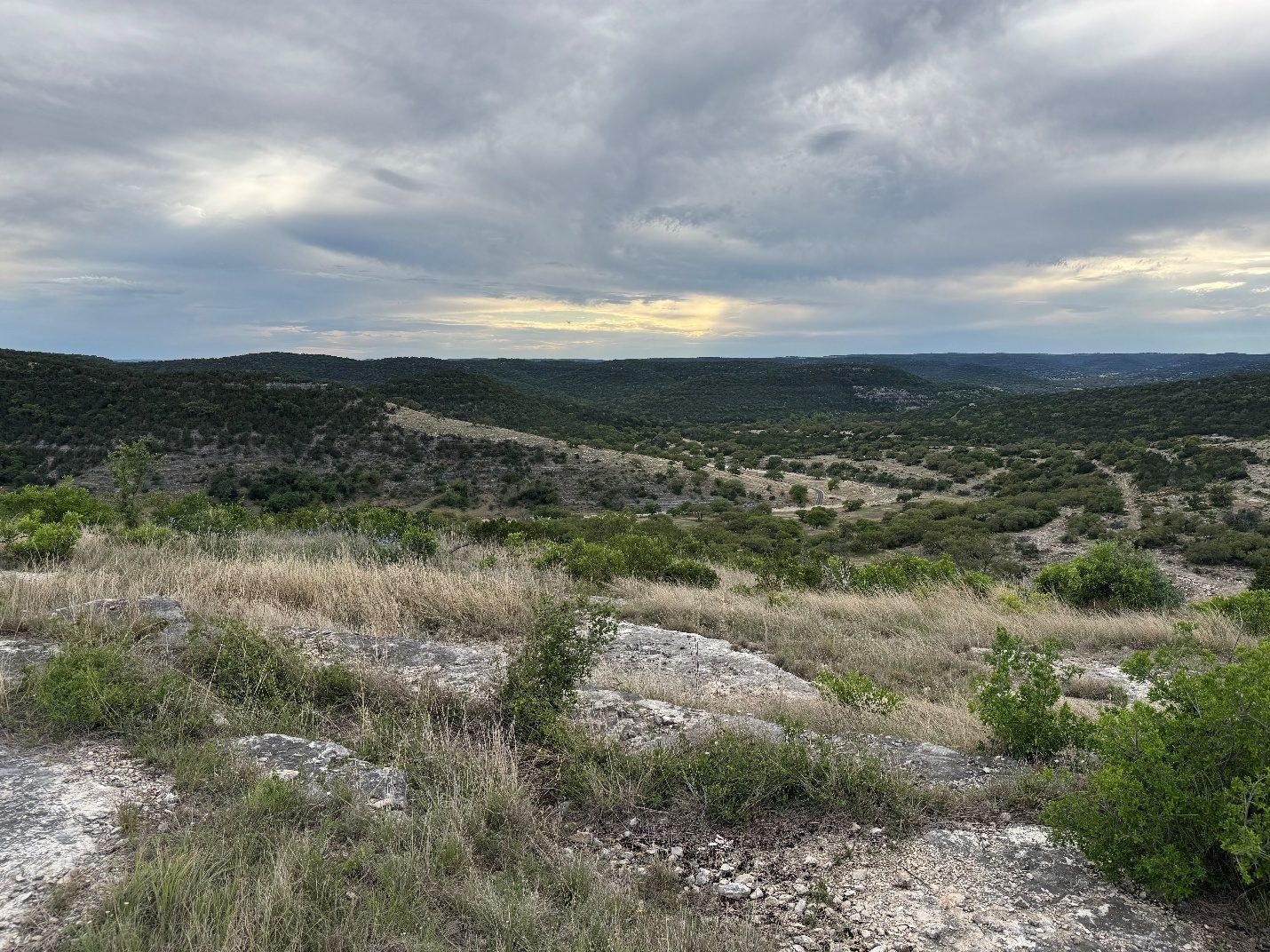
On the opposite side of the canyon were a variety of steel targets, each set painted differently so there could be no error in communication regarding which target set to shoot. Red, yellow, green, blue, orange. There were different size targets in each color set, the smallest typically being a ten-inch circle. Doug wanted me to shoot each distance progressively, starting with the largest target (generally large to small was from left to right as you're looking at the targets). The reasoning was to see if I had my windage adjustments made properly. The process was, using the Kestrel, measure the environmental factors, including wind speed (WS1 and WS2 in retained in the Kestrel) and direction. Since I'd be shooting either prone or off a bench, I was able to use the Kestrel's wind direction and speed calculations to compute a range card or, in the case of exact lasered distances, a specific target card. The expectations were: 1) I would estimate the wind speed and direction without looking at the Kestrel and then compare my estimates with the Kestrel's precise measurements, 2) I would explain to Doug what I was seeing downrange that might have effects beyond those measured at the firing line, 3) I would verbalize how I thought any adjustments should be made due to downrange conditions, 4) I would dial my elevation and hold for my called windage, regardless of target size, and 5) I compare my impact results with my estimations.
Wind velocity was somewhere from 5 to 8 miles per hour from about 7 o'clock at the firing line and there were bushes and grass moving from a more 9 o'clock direction. I went with the Kestrel hold. Starting at 200 yards, I was pretty much on point of aim with impacts. Hitting the 10-inch circle was straightforward. 300 I started to see the downrange wind effects on the full-size target and made a .1 Mil hold adjustment and successfully hit to 10-inch circle. Next up was 500 and adjustments beyond the Kestrel hold were made before shooting the big target. There were no trees or other potential wind indicators in that distance area after the 300-yard targets so I made what I thought would be correct given my two prior distance experiences. My elevation remained spot on but my impact on the big target was all the way right of center. Another adjustment and impact was middle right and a little high. Third shot after another .1 Mil hold added put me on center. Moving to the 10 inch target, I was holding a good .5 Mils left and missed the target. Thinking I over-corrected, I held .4 Mils and......MISSED! Saw the impact which was right of the target so made another adjustment hold and, bingo. 10-inch circle at 500 was solidly punched within an inch of center. Keep in mind that 1 Mil at 500 yards is 18 inches. Thus, .5 Mils is 9 (almost 10 inches). That ended up being my hold left for windage—almost a full target width. The wind was obviously blowing downrange and likely at full value.
With all this recent experience, Doug had me move to 700 yards, which for the .308 in a 20-inch barrel is a challenge as the wind was certainly a factor and it takes nearly 5.5 Mils of elevation dial up to account for the more than 10 foot drop of the 168 grain Barnes TTSX bullet at that range. First shot hit on the big silhouette target holding just under 4 Mils which is a lot of hold!
My luck ran out on the 10-inch target. Four shots, each of which scared the target due to close but no cigarness. However, redemption on the fifth and final shot as the 10-incher made a little ding and bounced around on its mounting chains. The whole experience was very helpful in learning to better read and adjust for wind, especially learning to better account for downrange wind variability. As Doug said, the Kestrel is an absolutely amazing instrument but, in the end, the human brain is better—so long as it is programmed properly and it has a good experiential database to draw on. That's the perspective of someone who has an amazing shooting brain!
Back to the jeep and back to the lodge for lunch and an hour break just to decompress a little before we went out for the afternoon session.
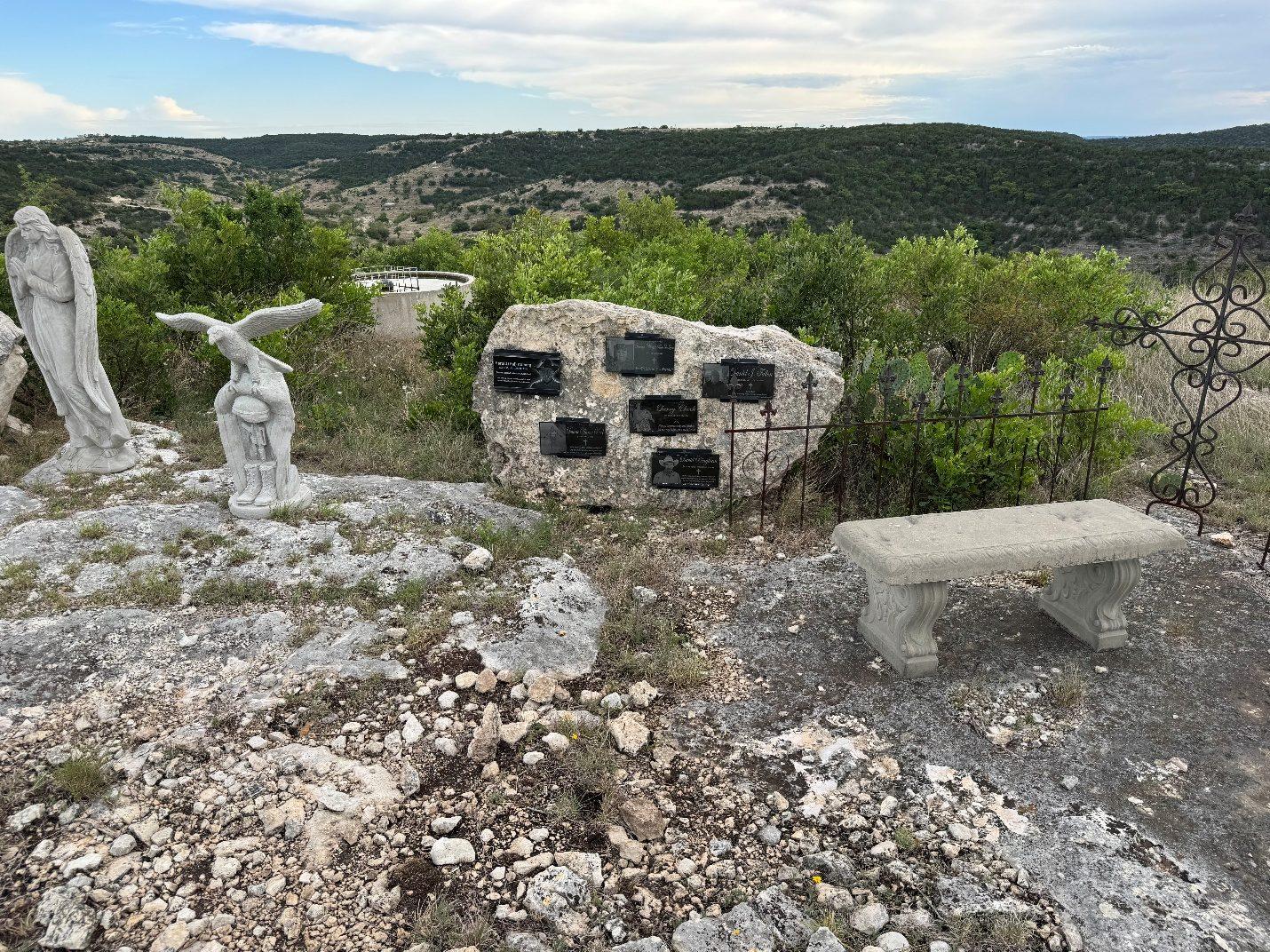
After lunch, we loaded up the jeep, ready to go. We drove to another fairly distant range which led to us going up and down hills so steep I feared the jeep would lose traction and we'd be done for. I wisecracked and asked Doug if he'd ever done this before to which he said, "one other time." Somehow, we ended up on the top of a hill where the FTW chapel and memorial wall is located. Doug said he liked to take people there to take a few minutes to appreciate the ranch, America, and how fortunate we are to have the time to do the things we were doing. I visited the inside of the little chapel, took a minute or two to pray my thanks for the place and the special people with whom I had the privilege of working, and to ask God's blessing on our country. Following that, Doug showed me the memorial wall where a number of names and dates were preserved, each honoree having had a special relationship with FTW over the decades since its founding.
We returned to the jeep, and following more death-defying maneuvers, arrived at a range that had silhouette targets of what I'd characterize as plains game-type animals as well as some mountain goats, antelopes, deer, and elk. Each of these was at an unknown distance so each required lasering for an accurate non-rounded number type distance. Two things of note here: First, you may not know that laser rangefinders vary in their accuracy, sometimes as much as 5 to 10 yards at longer distances. I was made aware of this in a ballistics book I read that tested a dozen or so rangefinders and immediately upgraded my previous rangefinder with the Leica CRF Max described earlier. It has a maximum measurement error of 1 yard at 1000 yards. That's exceptional. Second, this is where the Kestrel target function is most helpful. For any range, once you've taken your environmental measurements, including wind speed and direction, you can, for any rifle/ammo profile, quickly adjust the target distance and get the exact predicted elevation and windage for that distance. As learned in the earlier section on wind, you still have to make on the spot observations and adjustments for the wind but the Kestrel is super handy for this situation. We did all that, with me explaining to Doug my wind estimates and holds which I think of a Kestrel windage plus or minus depending on what I think about wind speed and direction from my position downrange to the target. Keeping in mind the idea of about a 6-inch kill zone for most game animals as well as the location of the kill zone, it turned out that I was pretty comfortable with broadside shots to about 550 yards. Generally, unless I would be able to build a rock solid position for me and my rifle, I'd be unlikely to take a shot at an animal at that distance with my .308 owing to the potential for wounding and not killing. Although I did not have my 7mm Backcountry (also in a Proof Research MTR 2.0 20-inch barrel configuration) with me for the FTW training program, I am comfortable shooting Federal 170 grain Terminal Ascent bullets for hunting purposes to 700 yards. It's simply a better and much faster long-range cartridge that is super accurate. So after working through a number of one-shot/on-kill events on the game animal targets, we headed out to yet another covered range.
This range offered 500 to 800-yard targets that were primarily rectangular in shape and were likely two feet wide and three feet high, perhaps a little bigger than man-size. The idea here was to hit center mass, taking all the learnings to date into account. Did all the measuring, environmentals, and verbalizing of wind observations, estimations, and adjustments plus or minus the Kestral. Having put nearly a couple of hundred rounds down range, I was feeling pretty familiar with rifle, scope, and ammo. Nothing can teach you better than repetition and coaching by a super knowledgeable and amazingly patient guy. His teaching and my learning were demonstrated pretty clearly as we worked through targets to 800 yards. My windage was very good although Mother Nature helped out by reducing the wind velocity from what it had been earlier in the day. Interestingly, at 700, my shots were consistently about two inches lower than what the Kestrel calculated. This led Doug to teach me the technique of "truing" your gun profile so that in the future, the Kestrel would accurately predict the actual trajectory of your rifle/ammo combination rather than just the theoretical trajectory which is based on mathematical formulas, not observations of reality. I won't describe the detail or the method here—it's a built-in Kestrel function, pretty easy to do, and makes your Kestrel elevation holds match the impact on target reality at distances typically 500 yards and beyond. Very, very helpful.
After truing my Kestrel, shooting to 800 was easier in the sense that my elevation dial-ups were accurate and, again, the wind was cooperative, so we finished battering the 800 targets enough times that Doug figured I'd actually learned something so we loaded up and did another crazy "let's challenge death" jeep ride back to the lodge. But we made a stop along the way to visit the gun cleaning barn where we cleaned my .308 thoroughly and discussed the merits of clean guns. My friend Jeff, the former Green Beret, often argues with me about gun cleaning. I am a strong, unyielding advocate of cleaning your guns absolutely thoroughly before putting them away. This was drilled into me when I was in the Army and I have never deviated from the practice. Jeff, of course, was a Special Forces operator, so he was so special he didn't have to clean his weapons—someone else did that for him, or so he says. Personally, I don't let anybody handle my firearms, unless I am overwatching them while they have a chance to shoot one of my pistols or rifles. In any event, my .308 was 100 percent clean, better than it came from the factory and was retired for the day. Back to the lodge by way of my room, a quick shower and change of clothes. Then to the lounge for a nice cocktail before dinner. Kolby was again bartending and doing a good job as my Irish Godfather appeared in front of my barstool just as I arrived atop it. Doug and I were the last of the training participants to arrive but stimulated the conversation as we all learned from each other what each group (me being a group of 1) had accomplished during the day. While there was a good bit of work involved in my day, I said it was great fun. In fact, I stated that it was the second most fun thing that a person could do with their clothes on. Which, of course, led to the inevitable question, "Well, what's the first most fun thing you can do with your clothes on?" The answer, I said without hesitation, is shooting feral pigs out of a helicopter. No question about it.
"I don't think that's right," said Kolby with an air of certainty. "Why do you say that?," I asked. "Because the most fun you can have with your clothes on is shooting two high value jihadis from a stealth Blackhawk helicopter, in the Syrian desert in the dark using NOD's (night optical devices) while they think they've escaped kill or capture." What can you say to that? I said, "You've got me there, brother. Let me buy you a drink." I did so and we adjourned for dinner. Must've been a hell of an experience being a Delta guy.
Early to bed, early to rise. The day had been long and productive. A call home to let my wife know I was still alive and I went out like a light immediately thereafter.
Day 3
Same morning routine. 5:30 a.m. wake-up. Breakfast at 6:00 a.m., bio-break and classroom at 7:30 a.m.
Spent time reviewing yesterday's learnings. Added a few odds and ends like temperature effects on density altitude, density altitude effects on trajectory, uphill and downhill angles and effects on trajectory. These are things that most people consider esoteric. I love the detail and thoroughly enjoyed the discussion.
First order of business was loading up the jeep and going off to yet another range that was intersected by a deep canyon with us on one hilltop and targets at varying elevations and distances across from us as far out at 1000 yards. It was a quite cool morning. So the Kestrel was put through its paces, as was my Leica rangefinder. Wind was 10 to 11 o'clock at 3 to 7 miles per hour and due to very limited vegetation between us and the targets, it was tough to gauge any downrange wind variability. That is, until scanning the canyon walls at full 25X magnification which allowed me to see little bits of movement in very low growing scrubby plants on the canyon walls.
We worked for about an hour or so which was much easier this day than the day prior. Apparently, some of the learning had sunk in, made sense, and I was actually enjoying applying what I 'd learned without great difficulty. Systematically banging the steel, my adjustments were pretty minor and everything to 800 was easy. Moving on to 1000 was more challenging. I shoot 1000 yards at my home range every time I go out there but not with a .308 as my preferred cartridge is the super high-performance 7mm Backcountry. In my opinion, there is nothing better for that distance. I was probably 50 percent at the 1000-yard target which was a 36-inch circle. My misses were inconsistent and I chose to blame the wind rather than my lack of skill. Minor hold differences at 1000 make big movements so the likely culprit was reticle wobble on my part.
Did some work on downhill shooting as there were targets to 600 yards at a 30 degree down angle. Shooting up and downhill is interesting as for reasons you can read about in any shooting text, the bullet will end up higher than planned if you don't make appropriate adjustments. The adjustments are easy once you understand what's going on. A very good reference on this subject is (https://www.rifleshootermag.com/editorial/hitting-a-high-or-low-angle-shot/83768).
Having completed this phase of the program, back to the lodge and a great lunch.
I mentioned early on that FTW ranch has numerous ranges, including several that are restricted for use by military and specialty law enforcement personnel. After lunch, we loaded up the jeep and Doug revealed that we were going to one of the military ranges—he felt he could rationalize that as I was an Army veteran and, apparently he assessed that I was not a complete idiot. So, off we went to a covered shooting position that overlooked an incredible range set up. I saw what looked like mud houses you might see in Afghanistan or rural Iraq in a town. Close together with probably 18-24 inch square window openings, some of which had green painted human head size targets while others had red targets of the same kind. Off behind the "village" and to our left was a convoy to include several heavy troop transport vehicles and two "technicals," which are essentially Toyota HiLux pickup trucks with .50-caliber class machine guns mounted in the bed of the truck. Trucks had drivers, passengers, machine gunners and there were a few dismounted foot soldiers in the area.
Doug asked me if I would mind if he tried to do some work with a brand-new custom rifle he had commissioned in 7mm PRC. Are you kidding? I was going to get to shoot with THE SEAL sniper trainer! How cool is THAT! Of course, it's ok, I said. As he was getting his rifle prepared, we discussed the merits of the 7mm PRC versus the 7mm Backcountry, the latter of which is superior to both the former, the 7mm Remington Magnum and the .300 Winchester Magnum. It's a great discussion but the Backcountry is THE champ. Just my opinion.
| 7mm Backcountry | 7mm PRC | 7mm Rem Mag | .300 Win Mag | |
|---|---|---|---|---|
| Barrel Length in Inches | 20 | 24 | 24 | 24 |
| Bullet Weight | 170 | 170 | 175 | 178 |
| Muzzle Velocity | 3,000 | 2,950 | 2,760 | 2,960 |
| Muzzle Energy | 3,398 | 3,285 | 2,961 | 3,464 |
| Drop at 500 yards | -24.1 | -36.0 | -44.4 | -37.7 |
| Energy at 500 yards | 2,434 | 1,932 | 1,523 | 1,843 |
| % Retained Muzzle Energy | 71.6% | 65.5% | 55.2% | 62.3% |
| Recoil Energy (estimated) | 25.2 | 25.2 | 23.2 | 30.0 |
Doug described the scenario as we were at 500-plus yards out on overwatch and our task was in two parts: 1) we would take out all of the red targets in the windows—he would work from left to right and I would work from right to left until we'd cleaned the targets. I lasered the targets at 513-522 yards, did the environmentals with my Kestrel and entered the target ranges to get elevation and holds based on wind. There were absolutely no downrange wind indicators so it would be imperative to watch for impacts and adjust if needed. Three-two-one—EXECUTE. So began our strings of fire. I was dialed in on the first two targets. Missed slight left on 3, corrected and cleaned 3, then 4. Doug's last shot was just as I was watching my impact on 4. Four head shots each at over 500 yards. As John McEnroe, the famous tennis champion used to rant when the referee made a call he didn't like, I said excitedly to Doug, YOU CANNOT BE SERIOUS!! That was awesome!" He agreed and asked how many shots I had taken to which I replied, "Five." Pretty good shooting, he allowed. I asked him how many he had taken and he said, "Four, but I've done this once or twice."
After settling down from being so exhilarated, he said that part two of our exercise was to take out every driver and passenger in the trucks, then anyone on foot. Lasered the various distances, the longest of which was 578 yards which sticks in my mind to this day. Shortest was around 510 yards. Believe it or not, that's a big adjustment for the .308 at that distance when you're trying to make shots on the upper half of a man-sized target. Kestrel computations made, I said I was standing by. Same color scheme as in the village. There were reds and greens. I was assigned to the greens. Three-two-one—EXECUTE!
From prone on a solid setup, good breathing, some confidence in what I was doing, my first shot took the driver of the very first vehicle out. I worked progressively farther out and was hitting target after target. My first miss was the passenger of the first technical. I was low and made a plus .1 Mil correction and took my target out. In real life, I'd probably not have gotten a second chance. I missed again the driver of the second technical and it took two more shots to take him out. I knew the farther out I got, the more drop I was experiencing. So my last target was the second technical's machine gunner. Doug had stopped shooting so it was completely silent as I centered elevation, and used the same windage hold as had been successful thus far. Bang! What seemed like forever finally ended with a "CLANG" and that threat was ended. I had two more foot soldiers to go and they were easier as more of each of those targets were fully exposed. Two shots and all done. I cleared my rifle and got up. Looked at Doug, awaiting criticism for being so slow. Instead, he said, "Well done. You got 'em all." I said, "Yeah, but I was pretty slow." To which he replied, "No, you were on the same pace as me—I just ran out of ammo." Apparently, he only brought a partial box of 7mm PRC instead of that and a spare. I was at this point on cloud nine, believing I could actually shoot fairly well. I said I thought this was the best thing ever and he just said, "Easy day."
We loaded up, went back to the silhouette animal range, and repeated the wind and unknown distance exercises we had done previously. Over the course of each of the two days of .308 shooting, I burned ten boxes of 20 rounds each. And, had broken into my third case and used half of another box. Compared to my Army training, that isn't all that much but those were different days and different reasons for learning. These past two days had been simply incredible.
Back to the lodge by way of gun cleaning. The day was done. Cocktails, dinner, cocktails, bed. Done.
Day 4
The last training day but there would be no slack. Early wake-up and breakfast. No classroom so load up and go to the zero range. Today, all day would be with the Beast doing safari shooting stuff.
Two groups of three rounds each at under ¾" each showed the zero good. Still had lots of ammo so good to go. Feeling very dialed in and not tired at all from the continuous activity which, in my normal daily life, is not at all the usual pace.
Went back to the Cape buffalo, chargers, and movers range with Kolby at the controls. I won't repeat the detail here as we essentially did two full repeats of what we did on this range previously. Kill zone hits on the stationary buffalo and the two chargers. Very confident in the Beast and in my ability to shoot it off hand. It is a truly amazing rifle. I'm betting the old-time hunters of elephants, lions, leopard, hippos, Cape buffalos, and crocodiles would have LOVED the Beast. I know I do. I don't know many people who think high volume shooting with the .375 H&H is fun but I sure do. Did three reps on the circle targets on the train. Proud to say 12 rounds resulted in 10 hits from 70 yards.
Off to the jeep and an entirely different area of the ranch. Very heavily wooded. Tons of brush. Doug parked the jeep in the road and said we'd walk from here and to be prepared for anything. We were strolling along, when the brush and the trees parted, a blasting trumpeting sounded, and an honest-to-God full-sized bull elephant came ploughing through and looked directly at me. Instinctively, I recalled my kill zones for an elephant, raised and shouldered the Beast, and center punched him just above and right between the eyes. Bolt run, reloaded and before I could shoot again, Doug said, "Good shot."
Totally adrenalized, we hadn't taken two more steps before the process repeated. The elephant this time presented broadside so I made a single heart shot and ran the bolt to reload. DRT. Again commended for accurate timely shot.
Doug then showed me how to use trees, boulders, and bushes to help build stable positions when possible to minimize the inevitable reticle wobble that is associated with offhand shooting. These are commonly referred to as "field expedient" positions. Very valuable advice. Some of the suggestions were new to me. And, here, up to now, I thought I knew everything. Not hardly. The great thing about these training programs is how much you learn that is new and how much you know that gets fine-tuned.
Just as Doug and I were chatting and my guard was down, with the Beast in carry position in my hands, another blast and a freaking elephant appeared out of nowhere not 10 yards in front of me. I literally exclaimed, "OH SHIT!" while simultaneously shouldering and mounting the BEAST and literally snap-shooting the elephant in the head shot kill zone. I could see the impact dead center. Don't know exactly how that happened or if I could repeat that but there it was. Doug seemed to think my reaction to being surprised was hysterically funny and, in retrospect it was. I cannot imagine what a real live elephant being that close and sounding off would do to a person but I know the shock I experienced with this one. Doug said at that point, I could unload as there would be no more elephants today.
We continued down the road until we came upon a leopard blind. Doug told me we would sit in the blind waiting for a leopard to show up in the baited tree about fifty yards away. Keep in mind that the Beast is zeroed for one hundred and is precisely accurate if I do my job. In the course of commenting on leopard behavior and leopard hunting, Doug said that, if a leopard presented itself, I should let it get into position, pick a single rosette in the kill zone and shoot it dead center. Small target, small misses. Still terminally effective. We sat a good twenty minutes in total silence. Leopard hunting involves very long stretches sitting totally still, typically in the dark, with absolute silence being critical to any possible success. A little more waiting, and I could see a full-size leopard begin climbing the baited tree. To say that he looked realistic is an understatement. As he stretched himself across a limb to reach the bait, I had a perfect broadside opportunity.
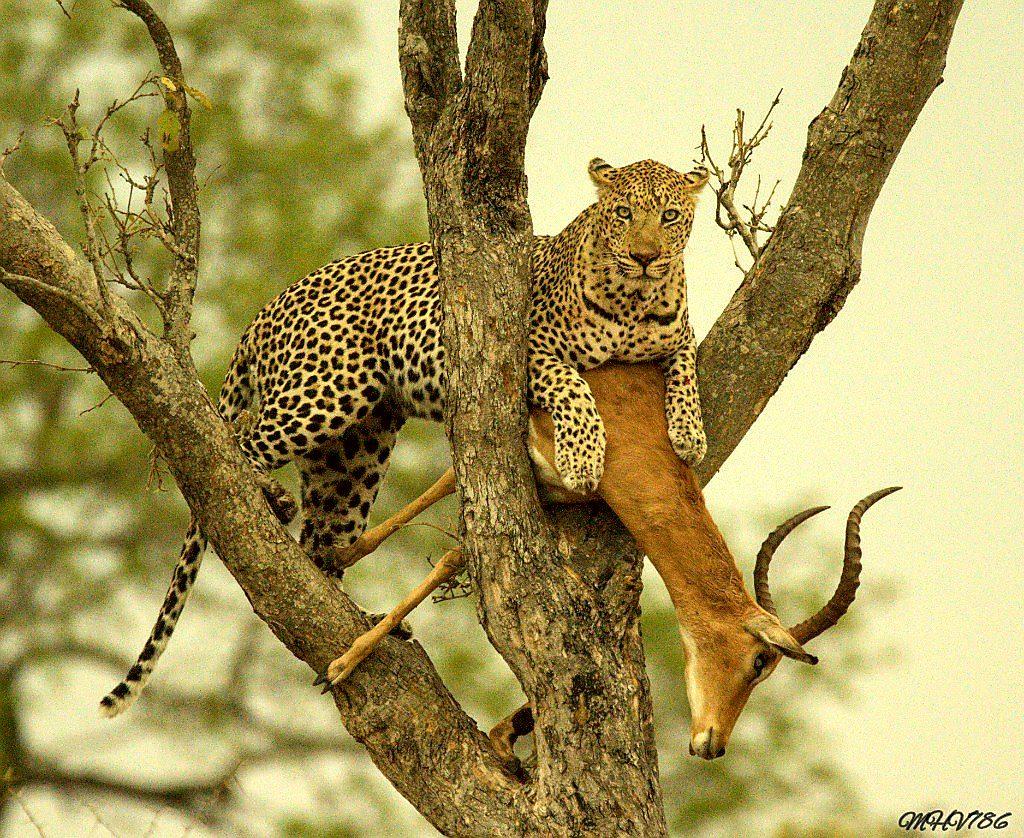
Remembering Doug's admonition, I selected a single rosette which appeared with such crystal clarity in my Swarovski scope that I could actually see individual hairs in the big cat's fur. Zero reticle wobble. Held an inch low. BOOM! The Beast did its thing and the leopard fell to the ground. Doug enjoyed the shot as much as I did and said so. We walked back to the jeep—I was waiting for another elephant to pop out but Doug said not happening. Nevertheless, I stayed loaded and on safe until we got to our ride. Cleared and put in the rack, the Beast was done for the day, except for a stop at the gun cleaning station where it was thoroughly cleaned and lubed.
Arrived at the lodge in time for lunch which was great.
Doug and Kolby announced that normally, there would be a shoot-off among the training participants to see who was "Top Gun." But, since, I was the only precision shooting trainee, I would win by default. So, no shoot-off. Instead, there would be something else.
That something else turned out to apparently be a tradition at the FTW Ranch. It involves taking a 16-pound bowling ball, inserting it into the barrel of a homemade mortar that is first loaded with a carefully packeted charge of black powder with a fuse inserted, setting the mortar at a "just so" angle, lighting the fuse, getting the hell out of the way and launching the bowling ball at a 4-foot square target 200 yards away on the side of a hill away from the back side of the lodge building.
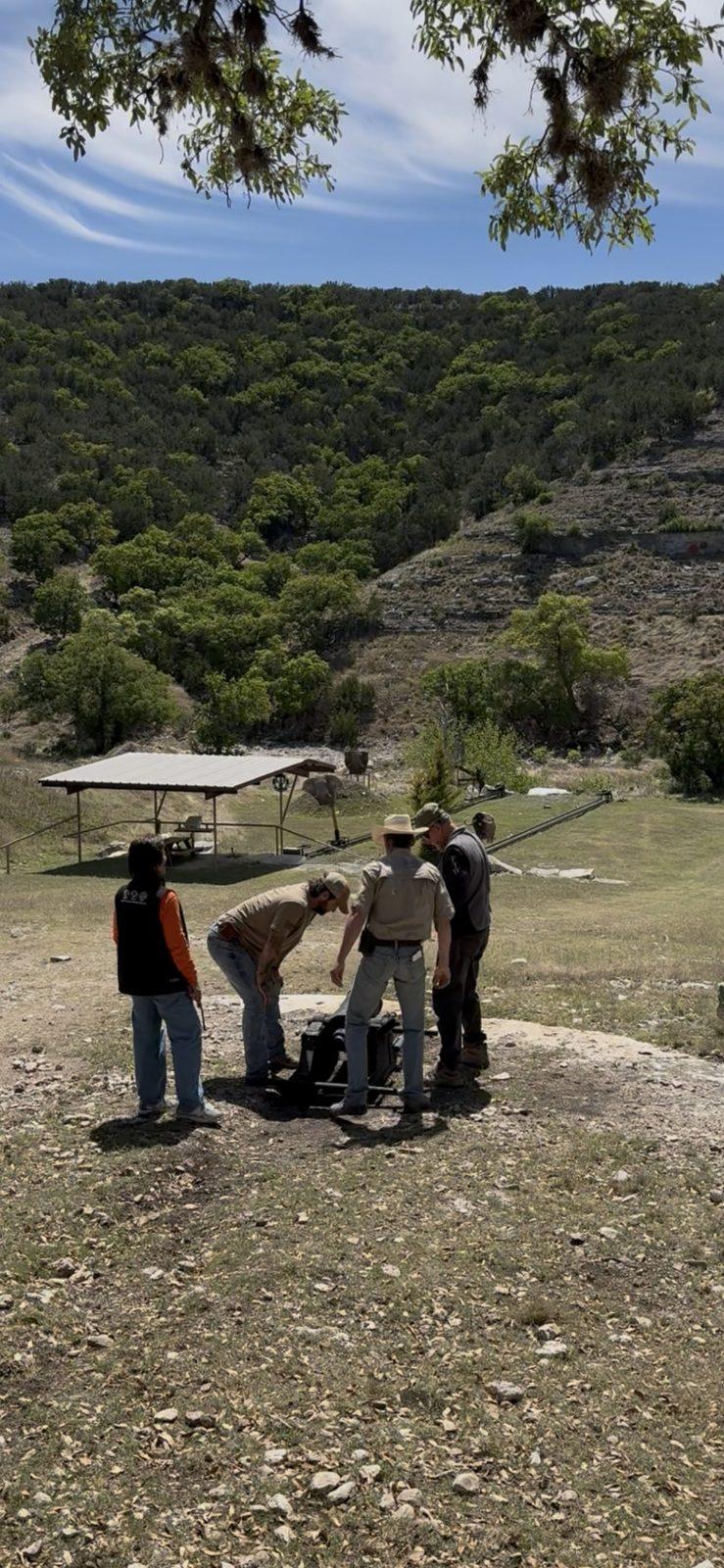
So, Doug, Kolby, the Operations Manager, and the Ranch Maintenance Manager together hauled the mortar out, placed it at the desired angle, tentatively and carefully loaded the powder charge packet and fuse, stuffed the bowling ball into the mortar, made all kinds of outlandish claims about their skills and accuracy in times past, lit the fuse, ran away and BOOOOOM!!!! The pink bowling ball flew out of the mortar, made a huge arcing trajectory, and missed the target by a good 50 yards low. There was lots of recrimination, utterances of disgust and disappointment, but all good cheer by those present. Lots of laughing, applause, and commenting on how silly the whole thing was.
Adjournment was to the bar. A few cocktails, lots of conversation and storytelling. Then break time until dinner. I spent my time packing up, taking a shower, making sure I had all my stuff ready to go, and took a nap.
Back to the lounge for another round of pre-dinner cocktails and general winding down. Talk of getting together if and when anyone came to DFW area and wanted to go to my home range for some real long-range shooting to a mile and beyond.
Final dinner which consisted of delicious tenderloins and everything you can think of to go with them. The kitchen staff is just outstanding and, believe me, no one went hungry for even a minute during our four days of training.
Following dinner, one last drink. Then early to bed.
Early wake-up, coffee and small breakfast. Loaded up guns, gear, luggage, remaining ammo and began the long, eight-hour drive back to Dallas.
Arrived at about 5:15 p.m. and parked the truck in the garage. Stumbled into the house, stiffer than a board from the long hours of sitting and paying attention in the heavy traffic on the way home.
Home, sweet home!
Learnings, Reinforcing, and Takeaways
As mentioned, I learned a lot of things, reinforced things I knew but refined them, and took away a huge amount of information and experience that I'm sure I could not have gotten any other way.
So, what are these things of value?
Trigger control and breathing. Pay attention to these and do them the same way every time. Trigger press, not pull. Steady press until break, then reset immediately.
RUN THE BOLT! When the shot breaks, in any hunting situation, run the bolt immediately following the shot. You may need an instant follow-up. Even after my FTW training, I routinely practice dry firing and running the bolt. Even in precision shooting where precision and accuracy are paramount and time may not be a factor, it is good to run the bolt quickly and efficiently. If you can do this without disturbing your set up, so much the better.
Work on minimizing bolt wobble, even offhand. When the shot breaks, the bullet will go where the reticle is aimed at that time. If you wobble here and there, that's where your bullet will impact.
Develop and maintain a repeatable, do it every time, routine. Build your setup, breathe, sight/aiming focus, trigger control, bang, run the bolt, and re-engage. Practice. Dry firing is good.
Be able to snap shoot when needed. Practice, practice, practice.
Shoot enough, precisely enough, and often enough to develop and maintain confidence in yourself and your gun. Period. It sounds corny, but bond with your rifle. Line one from the U.S. Marine Corps Rifleman's Creed should be understood by any rifleman. "This is my rifle. There are many like it, but this one is mine." (https://www.usmcu.edu/Research/Marine-Corps-History-Division/Frequently-Requested-Topics/Marines-Rifle-Creed/)
Stock fit, adjustable cheek piece, eye fit. To get the best results from your rifle, it must be fitted so your cheek welds to the stock and your eye aligns to your scope. These are available. I got my first one at the FTW Ranch. Here is another I have that is of very high quality: (https://www.amazon.com/dp/B0962Z1N3Q?ref=ppx_yo2ov_dt_b_fed_asin_title&th=1)
Wind reading IS voodoo. But you can learn it. And practice it, even when not shooting. Read everything you can about how to do it, how to use direction and velocity indicators, and so on. There is no substitute for practicing it while shooting and developing the real-life feedback needed to get better at it. I learned an incredible amount from Doug about this.
I learned the truing process from Doug and have the instructions handy to be able to do it for any of my rifles. It is essential for precision shooting, especially at long-range (500 yards and beyond). If you don't have a Kestrel, get one. It's a critical and useful tool for any rifleman.
I learned I can accurately shoot under adverse circumstances while remaining relatively calm. Charging Cape buffalos, trampling elephants, the anxiety of waiting silently for a leopard to appear, etc. These are obviously not the real thing but until you try putting yourself in harrowing circumstances, you'll never know how you'll perform. There's an old expression: "We don't rise to the occasion. We FALL to the level of our training."
Finally, I learned what is really the most fun you can have with your clothes on.
I hope that this report has been useful, informative, and/or entertaining. I very much enjoyed recalling my four days at the FTW Ranch. If you can do a training course there, I highly recommend it.