Make a note of the date—1884. Smokeless powder was invented by Paul Vieille, a Frenchman. The French adopted it as the propellant for the 8 mm Lebel cartridge. The Brits adopted the .303 British cartridge powered by an alternative smokeless powder in 1889 and by 1895, Winchester was producing the .30 Winchester Center Fire (WCF), now popular as the .30-30. Just prior to the turn of the 20th century, the US Army adopted smokeless powder in the form of the .30 Ball cartridge for the Krag rifle.
The impact of smokeless powder in firearms and large weapons such as howitzers, artillery pieces, bombs and more cannot be overstated. Literally, hundreds of millions of weapons, civilian and military, have been produced since its adoption. Development of various kinds of smokeless powders is nothing short of amazing. Specialty powders for pistols, rifles, and shotguns produce different pressures behaviors, and outcomes when loaded into the myriad types and calibers or ammunition around the world.
Note this date as well: December 2019. Sig announce the .277 Fury. Using a hybrid steel/polymer case capable of operating at 80,000 psi, it produced 3,000 feet per second at the muzzle using a 155 grain 6.8 mm bullet from a 16-inch barrel! The military selected this round and accompanying rifle for its Next Generation Squad Weapon.

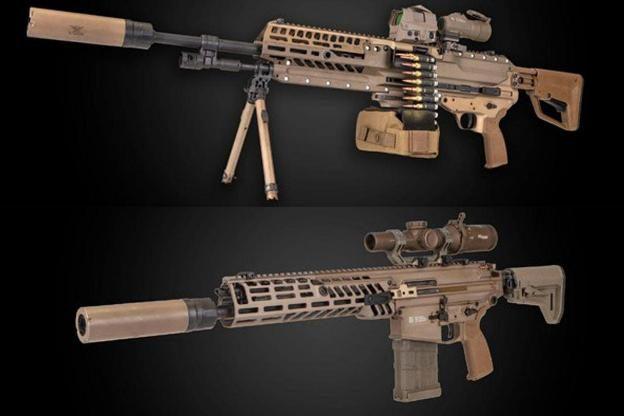
With all that in mind, make a note of this date—January 7, 2025. That is the date that Federal released the 7mm Backcountry cartridge, capable of safely generating 80,000 psi to propel a variety of different weight projectiles safely at unbelievable muzzle velocities, especially from short, 20-inch long rifle barrels. Typically, the maximum safe operating pressures for rifle cartridges has topped out at 65,000 psi, that being contained in a brass cartridge case in modern high-quality steel rifle chambers and barrels.
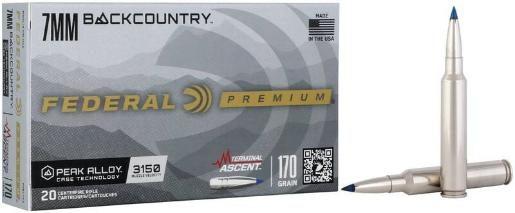
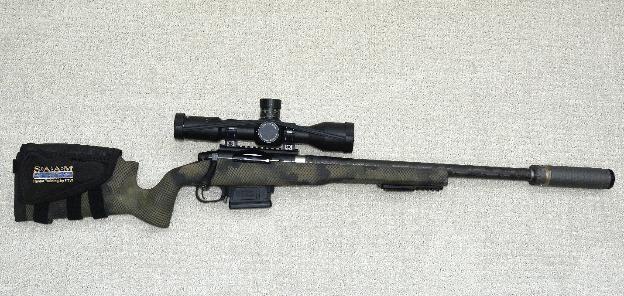
Federal changed the shooting world by developing a high-strength steel cartridge case that it called PEAK technology. As an example, it allows the 170 grain Federal Terminal Ascent bullet to travel at 3000 feet per second from a 20-inch barrel. Comparatively, the highly touted 7mm PRC and the elder 7mm Remington Magnum, each using the same weight bullet, produce about 2900 feet per second at the muzzle but from 24-inch barrels! In the era of hunting and shooting suppressed, that 4 inches is a big deal. Add a 6 inch suppressor to a 20 inch barrel and the rifle is still manageable both at the range and in the field. Add a 6 inch suppressor to a 24 inch barrel and you're fighting a long, less wieldy pole. Size matters!
The 7mm Backcountry as a one-off is amazing and impressive. However, it is really the extension of the PEAK case technology that is the game-changer. Federal has now announced the upcoming release of the 6.5 Creedmoor +PEAK loading. The enormously popular 6.5 Creedmoor is beloved for its inherent accuracy, light recoil, and 1000 yard plus capability. Using highly efficient, high ballistic coefficient bullets, the Creed outperforms the .308 Winchester, also one of the most popular cartridges in the US, but the venerable .308 produces less velocity, less downrange energy, and significantly more recoil. So, there are lots of rifles chambered in the 6.5 Creedmoor and now, Federal is making those rifles even more versatile as the 6.5 Creedmoor +PEAK outperforms the 6.5 PRC but does so from 6.5 Creedmoor chambers!
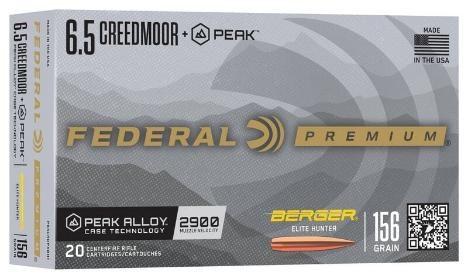
Depending on one's hunting and shooting preferences, it's easy (and less costly) to practice marksmanship with the basic 6.5 Creedmoor but equally easy (and perhaps more costly) to take the same rifle and scope setup to shoot the 6.5 Creedmoor +PEAK for hunting or longer-range target shooting. Versatility has become the name of the game. Obviously, you need to develop new DOPE for your rifle and scope but now you have a 2 in 1 piece of shooting gear.
I'm keenly aware that the US Military is heavily testing the PEAK technology in various iterations. As of May of 2026, The U.S. Army has licensed Federal Ammunition's patented Peak Alloy high‑strength steel case technology for multiple cartridges up to .50 caliber, with the goal of enabling higher‑pressure, higher‑performance small‑arms ammunition.
Not a lot of public discussion and disclosure is going on but the word is that the military may be finding several solutions to its search for greater downrange energy and terminal performance in a variety of cartridge configurations. Prior to this, Sig and the .277 Fury with the bi-material cases was an option. Federal, in alignment and cooperation with the US military is driving (carefully and at a serious, not rushed, pace) many options. For example, imagine being able to extend the range of the ubiquitous M4 carbine to 800 or 900 yards effectively with rechambering, rebarreling, or replacing bolt carrier groups, all without producing unacceptable, accuracy killing recoil increases. Or, how about wringing .300 Win Mag performance from a conventional .308 Winchester (7.62mm x 51) chamber?
There is a great deal of argument going on about whether the rifleman is obsolete as we are now deep into the era of AI powered anti-personnel drones, potential battlefield deployed robots, and other next generation weapons. Not to be overly argumentative but the recent experiences in Afghanistan, for example, suggest that modern weapons and technologies do not effectively negate the basic rifleman. If that is the case, it seems like improving the capabilities, including standoff distances, and terminal effectiveness are reasonable steps to take as regards military weaponry.


Hunting is a whole different matter. Faster, flatter, more efficient, and better is almost always desirable. And, it is apparent that all that can be accomplished in existing firearms. Federal has spawned a new era in firearms/ammunition technology and, now that the genie is out of the bottle, there's no going back. The next few years will be crazy with cartridge adaptations that totally outperform the platforms of the last hundred years, yet keep what are sure to become legacy cartridge guns running for the future.
Human innovation and discovery are amazing. Just keep in mind that this all happened in the United States of America.